

By ZENG Yanglin
In the current pursuit of the “dual carbon” target (carbon peaking and carbon neutrality goals), the eco-environment-oriented development (EOD) model is a means of integrating environmental governance and industrial development. Banks, as providers of large-scale funds, play an important role in the approach.
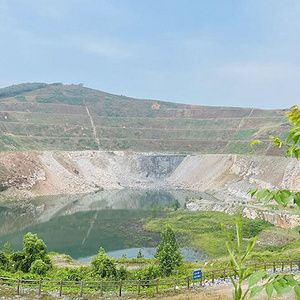
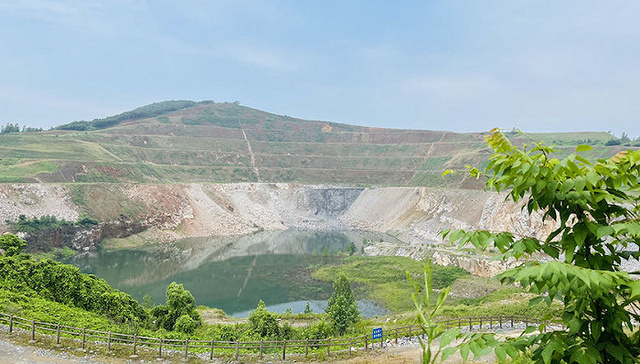
At Yanshan Dangkou mine in Xushe, Jiangsu Province, forty years of mining left a deep pit, and exposed rock walls with ruined soil and rocks scattered all around. In 2022, Xushe decided to shut down the mine and begin restoration.
Financial support came from the appropriately named EverGrowing Bank, through collaboration with the engineering team. In July 2022, a 200-million-yuan (US$28 million) loan kickstarted the mine’s re-greening.
This project is just a glimpse of how commercial banks are participating in EOD projects. Several banks, including ICBC, CCB and Bank of Jiangsu, support ecological restoration, agricultural development, water management, and basic conservation.
The EOD model addresses the challenges of funding ecological environmental projects and the need to internalize the economic benefits of environmental governance.
By integrating ecological environmental governance with industrial development, the EOD model aims to reduce public investment and create sustainable revenue streams for repayment.