

By HUANG Hua
Up to 20 million babies were born each year in China not so long ago, but the number had dropped to just over 10 million. Then, after the enactment of the two-child policy, the number of births peaked at around 15 million, but now it’s even less than 10 million.
“In Shanghai First Maternity and Infant Hospital, a few years ago, the number of deliveries was close to 34,000 a year, but now it’s around 25,000, a decrease of over a quarter,” said DUAN Tao, former President of Shanghai Maternity and Infant Hospital and founder of Spring Field Hospital MGMT.
Complicated procedures
Many obstetricians share Duan’s misgivings. Obstetrics departments in major cities used to be in short supply. The situation is even more apparent in small towns and cities.
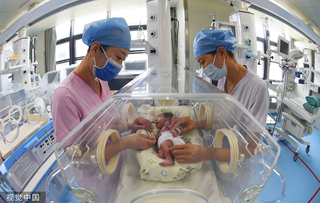
The winter of obstetrics is approaching. Worse still, while the birth rate plummets, cases of complex pregnancies, especially among older women are on the rise, further complicating the obstetrics realm.
In 2022, the number of births went below 10 million for the first time since 1950, with nearly 2 million fewer births each year since 2016. In 2022, the number of births was approximately half of what it was only six years ago.
The impact of this decline is most noticeable in county-level hospitals. Many maternity units in county towns have seen a significant drop in deliveries, some by more than 50 percent.
The disparity in healthcare quality among regions and levels of institutions has contributed to the current state of obstetrics. The centralization of childbirth services in high-level hospitals has left primary healthcare institutions feeling the chill of reduced demand.
The decline is influenced by changing attitudes towards marriage and childbearing. Delayed marriages, competition in the job market, unhealthy lifestyles, and the high cost of raising children have led to hesitation and a decline in fertility rates.
Unhealthy industry
While top-tier hospitals may not experience the same impact, even they are adapting to the changing environment. Obstetrics departments are being marginalized within hospitals, as more resources are allocated to higher-revenue departments such as surgery and minimally invasive procedures.
Some experienced physicians are transitioning to women’s health or pursuing alternative career paths. At the same time, private maternity centers are emerging as an attractive option for expectant mothers, especially in affluent regions.
This shift in childbirth services highlights the ongoing transformation within China’s healthcare system and the need for innovative approaches to address the changing needs and preferences of the population.
With births in freefall, the closure of obstetrics and gynecology hospitals is ongoing. This trend has adversely affected the healthcare industry, especially in high-end private institutions that rely on independent systems and substantial financial support.
Unwelcome contractions
Data from China Health Statistics Yearbook reveals that the overall number of obstetrics and gynecology hospitals in China slightly increased from 2017 to 2021, but almost all of that came in 2021. Additionally, the proportion of obstetrics and gynecology beds in the national hospital system has decreased.
The impact extends beyond the healthcare sector, causing business contractions, the closure of institutions, and job losses.
In light of these challenges, there is a pressing need to ensure well-equipped maternity centers in every region, where births can take place safely, ending the vicious cycle, of revenue, investment and career prospects.
Solutions by private and high-end institutions offer expanded services from pre-pregnancy to postpartum, shifting the focus to personalized patient care. Prioritizing maternal and infant safety, institutions are establishing centers focused on fetal development and expanding services to include specialized departments such as fetal medicine and infertility treatment.
Private maternity hospitals underline high-quality medical care and emotional support, catering to the desire for an optimal childbirth experience. The challenges call for improving services in urban areas while ensuring essential care and support in remote regions. The goal is to address declining birth rates while maintaining a high standard of maternal and infant health.
Wider malaise
The predicament of obstetrics reflects wider problems within the healthcare system. Obstetrics has traditionally held a secondary role in hospitals, overlooked and undervalued. Hospitals closing obstetrics departments due to financial concerns and risk aversion.
This closure stems from the inherent imbalance between investment and output in obstetrics. Maintaining round-the-clock operations of delivery rooms, regardless of the low birth rates, incurs significant expenses for hospitals. Obstetricians, midwives, neonatologists, neonatal nurses, and the Neonatal Intensive Care Unit (NICU) must all be sustained, and these things don’t come cheap.
While smaller medical institutions have closed their obstetrics departments, larger hospitals can absorb the patient influx without significant consequences. However, specialized maternity and child health hospitals face an uncertain future.
The root of these difficulties lies in the fee structure. Obstetrics fees in China are based on midwives’ rates, resulting in public hospitals charging nominal amounts that do not cover costs. This prevents them from engaging in more profitable services. Private hospitals, on the other hand, can set their prices independently, enabling the commercial model to thrive.
Moreover, the widening disparity between the costs of giving birth in public and private hospitals exacerbates the issue. Public hospitals offer deliveries at a fraction of the price compared to their private counterparts, discouraging public hospital obstetrics departments from achieving sustainable financial performance.
Unique transformation
Obstetrics is unique in that it pertains to a natural physiological process rather than a medical condition. As the declining birth rate in China persists and the pressure on obstetrics departments intensifies, it becomes evident that the focus must shift from a quantity-oriented approach to a quality-oriented one.
Reevaluating the pricing structure, seeking transformations in healthcare services, and placing greater emphasis on individualized care will be crucial in navigating the challenges ahead.