

By BAI Fan, CHENG Lu
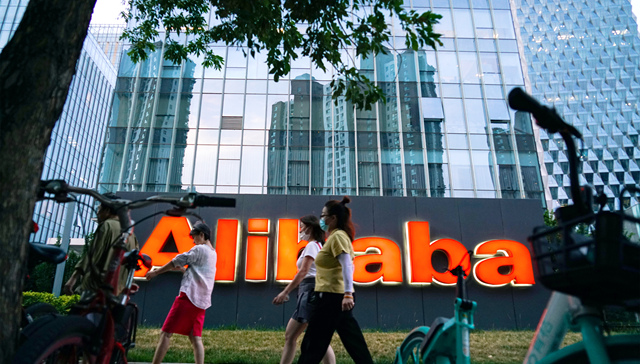
Since Alibaba Group split itself into six divisions, the investing world has been eagerly awaiting the next step. So, what’s in the pipeline at the tech giant, or rather at the litter of smaller tech giants?
On Thursday night, Alibaba released its Q1 report. During the announcement, half of the six offspring were pronounced old and wise enough to take care of themselves. Cloud company Aliyun, logistics network Cainiao and grocery business Hema Fresh are all set for IPOs.
Revenue in Q1 grew 2 percent to 208 billion yuan (US$300 billion). Adjusted EBITA for the quarter showed a 60 percent year-on-year increase, beating expectations. Non-GAAP net profit reached 27 billion yuan, 38 percent year-on-year growth.
Aliyun and Cainiao
Danial Zhang, CEO of Alibaba and Aliyun, issued an open letter saying the company seeks an IPO because of “the significant differences in business models, customer characteristics, and development stages between Aliyun and the other business of Alibaba”.
Zhang said the company would be fully spun off and listed as separate from Alibaba within the next 12 months.
Aliyun’s revenue in Q1 was down 2 percent year on year to 18.6 billion yuan. The company blamed the delayed delivery of several projects and Covid.
Meanwhile, Cainiao Network also has a plan to go public within the next 18 months. Cainiao was founded in 2013. Its revenue in Q1 this year was up 18 percent year on year to 18.9 billion yuan.
Hema Fresh
Hema Fresh will complete its IPO within the next 6 to 12 months. The grocery company establishes eight overseas procurement centers to bring international products to Chinese consumers. More than 30 overseas retailers have already signed agreements with Hema.
At least half of Hema’s customers have an appetite for imported products. Many of them have very committed stomachs. One in five import-buying customers gets all of their groceries through Hema.
HOU Yi, CEO of Hema, said the procurement centers are Hema’s first item on the globalization menu. The next step is to expand not just procurement overseas, but sales. Hou expects to take Hema to global consumers soon.
“About 70 percent of our GMV comes from online sales in China,” said Hou.
In Europe and the US, typically about 10 percent of supermarket GMV comes through online channels. “There is a huge market for us to explore in the future,” the CEO added.