

By CHEN Qirui
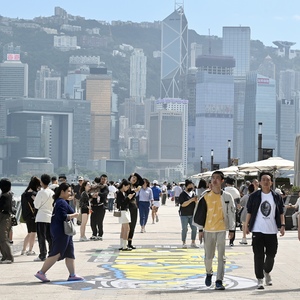
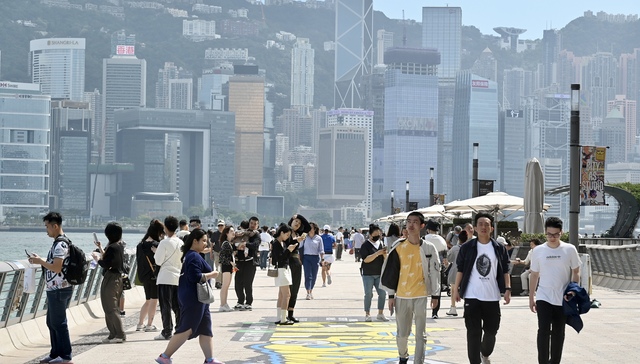
Over the May Day holiday, Canton Road in Hong Kong was bustling again with 625,500 people from the Chinese mainland visiting the city.
Before the pandemic, shoppers from the Chinese mainland accounted for more than 70 percent of Hong Kong’s luxury sales. Last year, only about 30,000 people visited Hong Kong during the May Day holiday, and 90 percent of them were locals.
The water is warming up
Since December, tourists and shoppers have been finding their way back to Hong Kong. The SAR government has handed out vouchers to tourists for 16,000 shops and restaurants. Blondie Tsang, the president of luxury retailer Lane Crawford, said since February, the spending of the top VIP card holders has been increasing by double digits on a weekly basis.
In 2021, Landmark, one of Hong Kong’s iconic shopping malls, opened an account on Xiaohongshu – the Instagram-like app and frontier of marketing battles and invited celebrities to share stories of their trips to fashion events. It was a channel to stay connected with mainland shoppers when they couldn’t be physically present.
And the efforts paid off. From December to February, consumption from mainland shoppers in Landmark has increased rapidly, though still only half of 2019’s.
Suki went to Hong Kong in April. She was discouraged at immigration when she saw that most of the small shops were all closed, but as soon as she went downtown, the scene changed. Luxury shops were packed. At the Chanel store, a saleswoman told her it would be at least an hour's wait before any staff became available.
During the pandemic, many luxury brands closed their stores in Hong Kong, but Hermes and Dior have since opened new, bigger stores in Harbour City.
Has Hong Kong passed its prime?
Jonathan Yan, principal of Roland Berger’s Shanghai Office, expects Chinese shoppers to buy most of their luxury goods on the mainland. Helen Lau, head of Hang Lung Properties’ Hong Kong business operation, holds a similar view.
“We believe that there won't be a large-scale return of luxury consumption to overseas markets. In the past three years, mainland Chinese consumers have become accustomed to consuming domestically, and luxury brands have increased their investment in the domestic market, providing a complete range of products and attentive services," said Lau.
Price is everything
Hong Kong has also lost its price advantage. An LV Neverfull MM handbag is priced at HK$16,300 in Hong Kong, about 14,300 yuan. And in the Chinese mainland, the same bag is priced at 14,400 yuan. Five years ago, a Louis Vuitton bag from Hong Kong was at least 20 percent less than in any mainland store.
A survey by Ruder Finn Asia in March found more than 50 percent of the respondents reckoned that Hong Kong was no longer the best destination for buying luxuries.
Local shops for local people
FANG Shixiong, opened a beauty salon in 2021. He thinks the big companies are benefiting from the return of tourists while small businesses continue struggling.
“A lot of people, me included, invested a lot of money in 2021,” he said, “only to be smashed by the pandemic the next year. We have no more money to try anything new.”
Among the skyscrapers, small, community businesses were once the vibe of Hong Kong but the subsidies these small business owners get is far from enough in the face of rising rents, partially a result of competition the big companies to open one glamorous emporium after another.
Medical intervention
For many years, pharmacies were among the most resilient businesses. But even they are gone.
“There were pharmacies at every turn of the street, filled by daigou (mainland shoppers), for Hong Kong medicine was popular in the mainland” Fang recalled. “But now I hardly see one pharmacy, except for the ones operating like expensive boutiques.”