

By NIU Yu
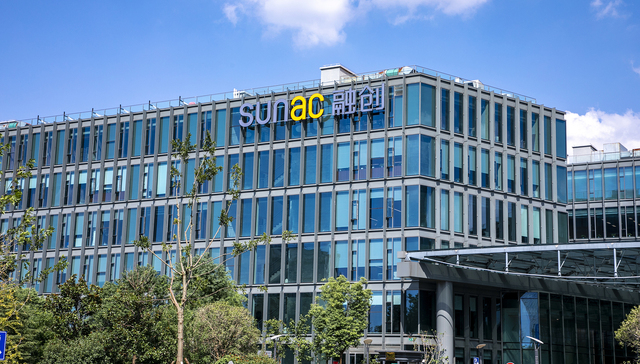
Debt-laden developer Sunac said last Thursday that it had reached an agreement on restructuring with creditors holding more than 75 percent of its US$9-billion offshore debt. The agreement indicates that the restructuring is nearing completion.
Normal operations will be resumed
Sunac first defaulted on a US$742 million (5.14 billion yuan) bond in March 2022. Founder and chairman SUN Hongbin has apologized to investors for the company’s turmoil and promised to make the restructuring fast to help the company resume normal operations. At that time, only 30 percent of offshore bondholders had approved the proposed terms.
In January, creditors in China approved a plan to roll over ten domestic bonds worth 16 billion yuan, or 85 percent of all of Sunac’s yuan debt, in effect extending their terms for another three and a half years.
The shares ticked up 6 percent on Friday, Sunac lost more than half of its market cap since resuming trading two weeks ago. The company posted a loss of 460 million yuan for 2022. Total interest-bearing liability amounted to 300 billion.
Cracking under the strain
Sunac is among many developers that plunged into distress during China’s campaign to crack down on real estate speculation and curb developer borrowing.
The real estate market has warmed up since relief measures were issued in December that extended bank credit, supported bond issuance, and opened up equity financing for developers – colloquially known as “three arrows.”
Firms with ample cash are making moves again. In some cities, land auctions saw record-high signups. Premiums in sought-after locations reached as much as 50 percent.
Sunac however is not among those attending the auctions. It is still trying to get back on its feet.
Struggling to raise money
The company has no plan to buy land in the foreseeable future. Developers that are deeply indebted still struggle to raise money as spooked creditors expect excruciating terms. Sunac will, however, get some government funding to finish building houses that are already paid for.
CEO WANG Mengdeng told investors that the company had taken out an 11-billion-yuan loan to finish a property currently under construction and had made material progress in getting another.
It was a common practice for developers to sell houses before they were completed and use the money to buy land and build more, but the business model ran aground when liquidity dried up. Construction halted. Some homebuyers stopped paying mortgages while waiting to move in.
The government loan will give Sunac some breathing space but only to a limited extent, said HUANG Lichong, of financial advisory firm Walsong Investment. It is earmarked for houses that have already been paid for and cannot be used for other purposes. It will not generate any income at all.
Huang believes that Sunac will gradually wind down as assets are sold to pay off its debt. In the best-case scenario, it will continue to build and sell houses but never come close to its previous self in terms of sales, coverage and scope of business.
Sunac’s Q1 sales were 29.2 billion yuan, about a fourth of the 116 billion in the same period of 2021 before its debt crisis.
Sunac, however, will likely hold onto its most valuable assets. These include 1.4 trillion yuan worth of land, half in big cities, as well as several buildings in Beijing and Shanghai almost ready for sale. Insiders say they are almost sold out and the take for each development could easily reach ten billion yuan.
CEO Wang Mengde once said asset sales destroy investor confidence and make future fundraising costlier. To see to the completion of existing developments, Sunac needs to maintain some bargaining power with creditors.
People familiar with Sunac say the company has been in talks with asset management firms – a misnomer for institutions formerly known as asset strippers, specializing in turning around and disposing of distressed companies.
Waiting for help to arrive
Sunac has already consigned over 20 billion yuan of assets to these advisors. They provide Sunac with much-needed cash. Sunac has repeatedly stressed that working with asset management firms is “very different from asset sales,” and that the relationship will help restore Sunac to normalcy
In recent years some developers have pivoted away from building residential houses to developing commercial venues such as shopping malls, hotels and sports venues, but Sunac is unlikely to follow this path. Sunac cut its headcount by nearly a third in 2022 but retains a staff of around 45,000.
A Sunac manager who prefers to remain anonymous said the company is focused on “getting existing projects to last long enough for help to arrive,” and that there will be no new investment before debts are paid off.
Heads have rolled
At Sunac, regional heads were given great autonomy and have consequently carried much of the blame. In his apologies, Sun Hongbing owned up to “a habitual urge to scale up” and delegating too many responsibilities to those advocating aggressive strategies.
Southwest and Central North, which expanded fastest in the pre-2021 go-go era, were hit hardest when the market turned.
The Southwest regional company bought 50 percent of a tourist resort developer for 15 billion yuan in 2019 and acquired another real estate company for 9.9 billion in 2021, leaving its bank account empty. In the Central North, sales targets were so high that some employees were forced to buy houses themselves to avoid penalties.
“The boss went the wrong direction in 2020 and 2021,” said an employee of the former regional head. “Even when policies changed, he thought the market would soon go back to normal.”
The two regional heads were recalled this year and are rarely heard of these days, according to Sunac insiders.