


By WU Yangyu
In China, every brand of phone claims to have “fans.” These “fans” put great importance on microscopic differences between one phone and another, or one brand or another. They are easy to spot, shouting about it on social media.
It’s quite easy to understand why someone may become an Apple fan, for example, but a bit trickier to understand what factors conspire to create a Vivo or Honor fan.
Going premium, new retail and other caprices
Simply identifying a phone can be tricky in China where the difference between Xiaomi and Oppo, for example, comes down to little more than fonts, puns and opinion. Redmi’s central “d” looks very much like Realme’s “al” squashed together, or vice versa. The innards of both phones are reportedly made by many of the same suppliers.
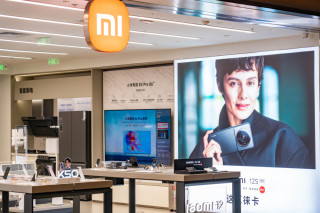
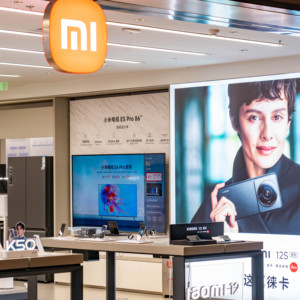
These stage-managed fans used to besiege their local electronic stores in search of the latest models or just to create a fuss, but in 2021, Xiaomi Studios began to appear. These were Xiaomi’s attempts to mimic the Apple store. And, much like the Apple store, Xiaomi Studios are little more than overstaffed shops with highly restricted product choices and IKEA-style shop fittings. The biggest draw is probably the aircon.
Events of 2021 didn’t turn out exactly as expected. Xaoimi opened 10,000 stores, and started loading publicity materials with throwaway catchphrases like “going premium” and “new retail.” Xiaomi seemed to have forgotten its primary job and purpose - selling cheap phones to people who are either looking for value or don’t have much money to spend.
The Ten Thousand Things
Xiaomi stores appeared in the summer of 2020 in Henan Province. Huawei’s chip supply had just been cut off by US sanctions and Xiaomi decided that sales and profits would be higher if it managed its own retail channels.
At that time, Xiaomi mainly worked with licensed vendors who bought from regional distributors and sold Xiaomi side-by-side with the almost indistinguishable Oppo and Vivo, or any other brand out there. In order to differentiate its unremarkable mid-range phones, Xiaomi decided the best plan was to have its own stores where no one would see the vast range of variously priced alternatives.
The next year, Xiaomi’s “new retail” department was assigned to open ten thousand stores, which it did. That’s more than one store per hour.
“In the busiest few months, we received more than a hundred proposals a day,” said one employee. Reviewers were supposed to check the location, sales forecast and profit target for each of them, but: “In actuality, there was no time to check anything. We just skimmed through the basics.”
Less than two years later and about 500 of these stores have closed, the most often cited reasons being “lower than expected sales,” or even gloomier “substantial financial losses.”
‘You won’t make a fortune’
“An area which could only accommodate one store had three or five. Not all of them were destined to survive,” said another employee. “The way it works is that if you don’t reach your sales target, most likely you won't make a profit.”
A former store manager in Guangxi told Jiemian News that monthly sales were only 40 percent of forecast. Her store lost about 10,000 yuan each month and she shut down in January, almost a year before her contract was up.
A fundamental difference between these new Xiaomi-only stores and old licensed vendors is that there is no commitment. Studios are paid commissions only, and the best are rewarded with higher percentages and more popular models.
The mechanism was supposed to attract more sign-ups but completely kills incentives. There’s no inventory risk, so naturally, they don’t care and don’t try to shift the product. And Xiaomi is notoriously tight-fisted.
“You won’t make a fortune,” said a distributor in Southwest China. “You have to go above and beyond to break even.”
Premium at any costs
The problem is that almost everyone says Xiaomi doesn’t pay them nearly enough to go “above and beyond.” Store owners typically keep 10 percent of sales after costs, lower than the industry average. Department store “sales consultants” – the ones who greet customers and “find the right phone for them” – get nothing from Xiaomi. Other brands 30 yuan - 50 yuan for each phone sold. No wonder Xiaomi is not the right phone for you.
This means Xiaomi has very little bargaining power. Storms flooded stores in 2021, but few owners have since agreed to be insured against floods at a cost of 2,000 yuan a year. “We never made them feel rich enough to be able to afford an extra 2,000,” said a Xiaomi employee.
These Xiaomi Studios are part of founder LEI Jun’s plan to go premium. Reviewers have liked Xiaomi’s recent models, but customers don’t. Distributors and store owners are paid an extra two or three percent for selling high-end models but it isn’t enough to persuade them to shift undesired products. The industry consensus is that at least a five-percent extra is needed to motivate sellers to recommend one model over another.
Xiaomi seems torn between selling cheap phones at a profit to people who need them and burnishing its brand image to no clear end.
Not going to the next level
A two-story flagship store in central Shanghai was killed off after the lease was signed because it was obvious to everyone (except the person who signed the lease) that no one would go upstairs.
Various sources report that Xiaomi cut frontline sales staff by half last year. Market share slipped to 13 percent from 15 percent. High-end phone sales ticked up from 10 to 13 percent of total sales at selected channels, but the statistics have to be extensively tortured to make anything but grim reading.
Xiaomi assigns three to six staff trainers to each province - the industry standard is one per city. Unsupported store clerks (are expected to) read brochures to discover new product features.
Is it all about the yacht club?
No one even knows why Xiaomi wanted to “go premium.” The move was sold as bringing sales and service all into one place, but why would customers care about that?
Angry customers with broken phones do not want to return to a glitzy mall to get a repair. They want the job done in 10 minutes while waiting for a bus. An often-told story was that when a customer called a local repair shop one day, he was told the technician was “out delivering food” – and the only other licensed repairman in town was unavailable either.
After a year of trying, little has been achieved. Even customers who buy their phones at the most glamorous-looking Xiaomi Studio have to look elsewhere to find repairmen if something is not working.
When all else fails, fire someone
Internally, various measures have been proposed including the unimaginable route of hiring more staff and paying them a living wage.
“We did a lot of analysis. In the end, the conclusion is that our margins are too thin to do anything.”
In 2022, Xiaomi switched from opening new stores to improving efficiency at existing ones, doublespeak for firing staff. But Xiaomi has neither the technology setup nor managerial know-how to support multitasking workers.
It took the company two years to develop an inventory management system inside China only. For more than 30,000 overseas stores, inventory and workflow are still tracked by Excel spreadsheets.
Does the billionaire really know best?
Almost everyone agrees that “going premium” is incompatible with Xiaomi’s mission. It seems motivated only by Lei Jun’s personal whim. Perhaps his status as a maker of inexpensive items that people enjoy is not enough to satisfy Lei’s desire for personal recognition.
Hardware engineers are forever amused and frustrated by Lei’s petulant insistence on using “the best and the cheapest circuit boards.” At a product conference in 2018, Lei surprised everyone with his intention to keep Xiaomi’s net margins below 5 percent.
The best and the cheapest service, it turns out, is hard to find.