

By ZHOU Shuqi
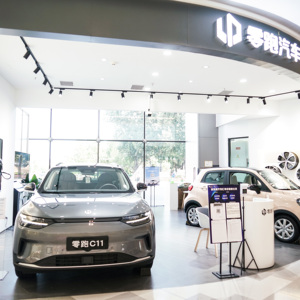
Leapmotor saw its revenue in 2022 increased four-fold to 12.4 billion yuan (US$1.8 billion). That was about as far as the good news went, according to the Chinese EV startup’s annual report released Wednesday.
Leap claims to have delivered 110,000 cars last year, up 154 percent year on year. But deliveries have slid drastically in the first two months of 2023. Only 4,300 cars have been sold so far, compared with around 10,000 in the same period last year.
Leap has a very big problem in the shape of a negative 15.4 percent gross margin rate. The company loses on every car it sells. Bigger sales mean bigger losses. It’s the only Chinese EV startup that has failed to turn a gross profit.
In a conference call, vice president JING Hua was sent out to tell shareholders that Leap “should” turn a gross profit this year. But of course, said the VP, with all the vicious competition among automakers, who could be sure?
The gross profit of an automaker is usually around 10 percent. NIO and XPeng both met that threshold last year, Li Auto hitting 19.4 percent. Eponymous founder and CEO LI Xiang said the company’s profit paid directly for their heavy outlay on R&D.
That’s another topic Leapmotor would happily gloss over. While painting itself as a company that develops everything on its own, many investors are worried. Leap spent 1.4 billion yuan last year on R&D, NIO spent more than 10 billion yuan.
ZHU Jiangming, president of Leap, said the company offers people cars that cost around 200,000 yuan but function like a 400,000 yuan car.
“Our affordable strategy means we make less profit from each car we sold,” he said. Zhu said Leap will release a new model in September which will be more expensive.
The trouble for Leap is that every company is pursuing an affordable strategy, and considerably more vigorously. Competition among EVs cost around 200,000 yuan is the most intense, XPeng, BYD and an EV made by JV tearing chunks out of the market.
Earlier this month, Leap lowered the price of its C01 model by 58,000 yuan. Zhu said the company reduced costs by removing “redundant” functions, such as electronic doors.
The drop in the price of lithium carbonate used for batteries lifted some pressure from the EV makers. Since 2023, price of lithium carbonate has dived more than 40 percent.
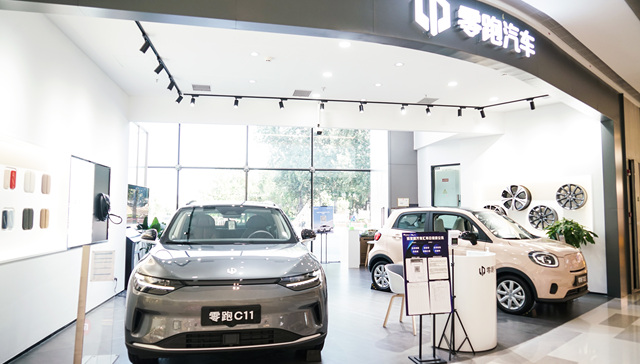
Leap now has 582 showrooms in 180 cities, about 15 percent of them are directly owned by the company. It plans to have 800 and sell 200,000 units of cars by the end of this year.