

By CHEN Qirui
When JC Plaza, a hotel-turned-luxury mall opened on Shanghai’s posh West Nanjing Road last month, shoppers were pleasantly surprised not to see any Louis Vuitton or Hermes. Not only that, the second floor is lined up with independent domestic designer brands, some in their first brick-and-mortar stores.
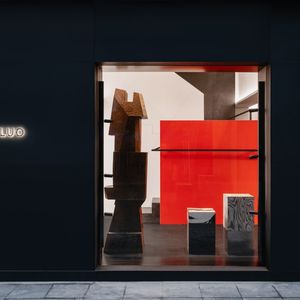
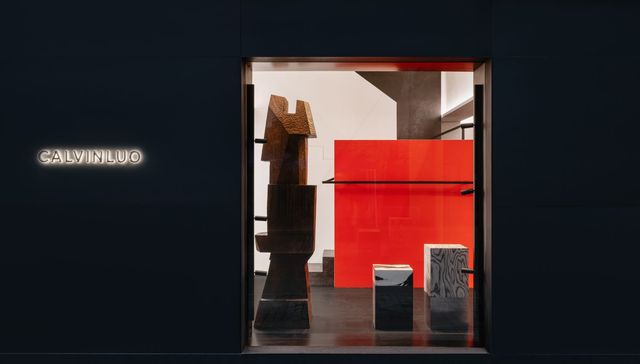
Most such brands sell online or through luxury boutiques because of their small volumes, but founders dream of opening their own stores. “In the eight years since we first launched, our own stores have always been on our minds,” said LUO Yucheng, founder of CALVIN LUO, which recently opened its first store in Shanghai’s historic district. The 220-square-meter space showcases CALVIN LUO’s own collections and selected items by sub-brand DTW.
Small guys stick together
CALVIN LUO is among the biggest domestic designer brands, with 65 full-time employees and 100 million yuan in annual sales (about 30 percent of it is from online, the rest from boutiques). Smaller brands, in contrast, may not be able to afford the rent and fitting. Luxury brands typically spend from 30,000 yuan (US,500) to 40,000 yuan per square meter on renovations, versus the average of 5,000 yuan for mass market brands.
Many founders wait until they have enough confidence in their brand recognition before going brick-and-mortar. Shushu/Tong, one of the domestic brands in JC Plaza, had been using its Tmall store as a testing ground for pricing and styles since 2019. The founders decided they were ready when at least one item went viral every season.
“You can reach buyers from all over the country online, which is good for the brand in the long term,” said LIU Xinxia, co-founder of Labelhood, an incubator that Shushu/Tong works closely with. Shushu/Tong co-founder Lei Liushu said online stores make it easy to analyze consumer behavior and preference.
Almost all founders interviewed told Jiemian News that, compared to luxury boutiques where all brands are mixed together, stand-alone retail stores are great for fortifying brand image and connecting with customers. Given the high rent charged by luxury malls, many start out as neighborhood stores, prioritizing locations that already have clusters of independent designer brands.
More freedom, fewer rules
“Many developers don’t know or don’t care about domestic designers,” said GUAN Lin, founder of Short Sentence. Luxury malls impose their own standards and styles, leaving individual brands little creative leeway.
Short Sentence opened its first store last year in Anfu Road, a trendy neighborhood dotted with third-wave coffee shops and luxury boutiques. In addition to selling clothes, the space hosts lectures and art shows. It is open until 10 at night, later than most stores in the same area.
“We have more freedom on the street. There are not nearly as many rules as in a luxury mall,” said Guan. “We are experimenting with different ideas and business models, and hope to apply them to other stores when we are bigger and more mature.”
The second Short Sentence, probably to her own surprise, ended up in JC Plaza. JC Plaza’s small size and accurate customer targeting make it a good fit.
Luxury malls, meanwhile, are trying to differentiate by including small designer brands. “Mall rents are getting competitive. In a city like Shanghai, where most people hang out and spend money in malls, we are just better at bringing customers and designers into one space,” said YANG Jian, president of JC Plaza’s operator Baohua Group. To distinguish itself from bigger malls in the same area, he said, JC Plaza has chosen to work with smaller, less-known brands.
Shushu/Tong had first looked to open a store in Shanghai’s historic neighborhood, but chose JC Plaza in the end to “send a signal to the market.” “We didn’t think too much about being ‘luxury’ or ‘being in the trendiest mall.” But it matters who your neighbors are, and what you aspire to,” said LIU Xinxia, of Labelhood.
Supply chain and inventory management are more complicated for brick-and-mortar stores, and brands that are used to selling online have to relearn everything. “Pre-sale windows online can be as long as 45 days, and customers expect to wait this long. But in a brick-and-mortar store, a customer comes in, tries something, and buys it on the spot. This means we have to be extra vigilant in preparing inventory,” said Liu Xinxia. Interacting with customers in person also requires a different set of skills.
For stores with more than one location, another challenge is to differentiate. Guan Lin said the Anfu Road store will focus on building a community, while the JC Plaza location will try to create a sleek buying experience.
Both Short Sentence and Shushu/Tong say making a profit is not a priority at the current moment, although sales at both stores exceeded expectations in the first month after opening. Liu Xinxia said the first store is a proof of concept, and that one should not read too much about the first month’s performance.
“We want a strong brand,” said Guan Lin. “It’s about building a viable business model that can be applied anywhere we go.”