

By LU Keyan
Just after LIU Ang opened his Huawei store, the phone maker was sanctioned by the US government. With its chip stock dwindling, Huawei all but stopped sending high-end phones to small sellers like Liu. It was all unpopular phones and small profits. Eleven months later, he shut up shop.
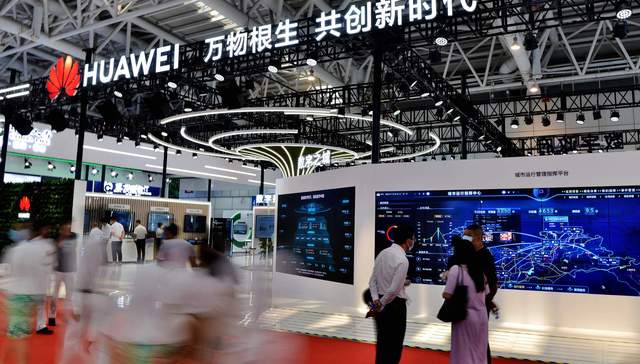
Huawei has always prioritized large, centrally-located stores, even in the good times. Since the sanctions, small sellers have been starving to feed big ones. Large “experience centers” are opening slowly but steadily across the country, but away from the headline cities, three-fourths of stores have closed. Liu personally knows about twenty of them.
“Most shops have closed and the survivors make much less money than before. And there’s still rent and salaries to pay, so we have found other ways to survive,” he said.
How many phones per car?
Big stores aren’t doing much better. Sales have nosedived there too. A store in a provincial capital that used to sell 20 phones a month now sells six or seven. Smaller stores in smaller cities see many days with no sales at all.
LI Chunyan, “experience center” manager, said she got only one or two popular high-end models every month. But, she said, they are not always out on display even when in stock. A Mate40 can sell for several thousand more “through other channels.”
Huawei has been forcing sellers to accept Zhixuan phones, a spinoff brand. Indeed, the two brands share similar looks, functions and even names – Huawei Mate40 versus Zhixuan M40, for example – but customers only care about the Huawei name on the box, even if it’s the same widget in the box.
Huawei released two cars last year, developed with automaker Seres, and has suggested to its more than 60,000 stores around the world – many smalltime operations like Liu’s - should “pivot to cars.” The two models still bear the Seres marque, but their association with Huawei was the selling point. YU Chengdong, CEO of Huawei’s consumer business group, loves to show up in stores and talk about how efficient they are and how the driving experience was “better than luxury cars.” In August, sales hit 10,000, making Seres the fastest EV maker to that target.
Huawei/Seres now has 700 dealerships in 171 cities – including some “experience centers” – and at least 500 are planned to open this year. A huge salesforce is being assembled with promises of commissions up to ten times more than traditional car makers. A phone-seller-turned-car-dealer told Jiemian News that at he negotiated a margin of about 30,000 yuan (US$4,500) per car, equivalent to 60 phones.
A surprising number of phone sellers are eager to make the switch. The biggest cost is a sample car, but there is no need to worry about inventory after that. And the floor plan only needs minor changes.
Li observed that she would need more qualified staff, and there would be a lot more pressure to meet sales targets. “Look at the crappy cars on the street. In a small city like ours people don’t spend 300,000 yuan on a car,” she said.
The future is elsewhere
Despite falling sales, sellers are loyal to Huawei. The dealer above says Huawei allows much higher profits than other phone makers – 18 percent versus 14 percent with Oppo and Vivo – and does a good job controlling reselling, which direct sellers like himself hate. He has been trying to sell more low-end phones and smart devices online, including through social media and group buying, with mixed results. Now he is looking for schools and hospitals that are trying to buy in bulk.
Li expected to make around a million yuan a year before the sanctions, said believes in the brand and is willing to “wait the sanctions out.” In the meantime, she is selling accessories and offering repairs.
Liu Ang has quit the smartphone business altogether. The market has plateaued. Phone production and sales in China have declined for more than a year. The future is elsewhere, maybe in cars.