

By QIN Siyue
LAI Yu has been collecting sneakers since 2015. He is a big fan of Yeezy, a series jointly created by Adidas and rapper Kanye West, but other than that, he has bought little else from Adidas recently.
“They look kind of dated and ugly. There isn’t much technological edge either. Adidas is relying on a few classic series right now,” he said.
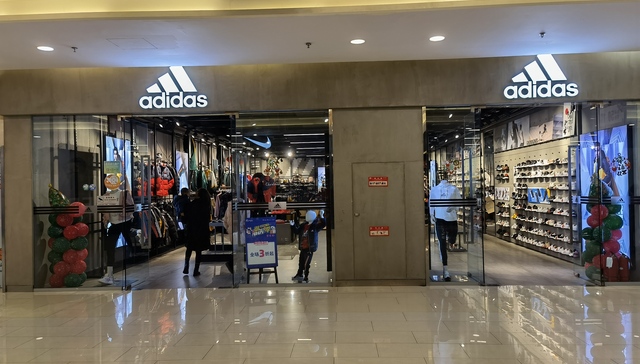
Revenue in China fell 35 percent in the past year, and in stores across the country, the decline is all too obvious. At a store in Zhuhai of Guangdong Province, we saw hardly any customers on weekdays. Even on weekends, store clerks were playing with their phones to kill time. In a department store in Nanning, two of its three Adidas outlets have shut up shop, and the other is closed “for renovations.”
“We’ll probably find some guochao (China-themed fashion) to replace them,” the store manager said.
An awkward situation
Adidas blames lockdowns, but its Chinese counterparts are doing just fine. Li-Ning and Anta both posted double-digit growth in H1. Li-Ning opened 65 stores in Q2.
Adidas CEO Kasper Rorsted reportedly told a German newspaper that the company had failed to grasp the essence of the Chinese market. As Lai Yu and his fellow sneakerheads have shown, the brand is in an awkward position - overpriced and not very good.
Domestic brands are spending more on R&D. Anta now has 60 R&D centers in 20 countries and plans to invest 4 billion yuan in product development. Adidas seems to still believe in hiring celebrities and blasting ads. When most of its brand ambassadors were themselves canceled during recent controversies, surely Adidas grasped that it was more than simply bad luck?
Long-distance runners outpaced by locals
Adidas has always had large inventories. In 2019, it reported 4.8 billion euros worth of inventory versus only 873 million in cash, and now the number has ballooned to 5.5 billion. Generally speaking, it takes 18 months to get sneakers from design to rack, but for Adidas, which uses factories in Southeast Asia to supply the Chinese market, the process can be up to three weeks longer, an eternity in the world of fast fashion.
Not being able to dispose of inventory has hurt the bottom line. In Shanghai, prime-location stores have had clearance sales all summer. A distributor in Guangdong said it was “impossible to get rid of anything without big discounts.” Topsports, the biggest Adidas distributor in China, reported a 12 percent decrease in sales last year.
Successful sportswear brands understand the importance of localizing their strategy. Skechers makes 85 percent of the products in sales in China locally. It has just opened a 3-billion-yuan warehouse in Jiangsu Province.
Lululemon, despite only spending about 2 percent of its budget on marketing, has built a cult following among young professionals through word of mouth.
Adidas' answer is to dump distributors and sell directly online. Online sales actually grew in Q2 despite the overall decrease and made up 20 percent of the quarterly total. But on Tmall, it is still far behind domestic competitors in user engagement and customer retention.
Going off track
Underperformance is at least partly attributable to poor hiring. The trouble can be traced to September 2020, when Colin Currie, the Adidas stalwart who made Asia the biggest, most profitable market, abruptly resigned. A new head was appointed. Executives - many with no experience in sportswear – came and went. The new head was dumped and replaced by another Adidas alumni.
The upheaval may be over for now, but Adidas is still in a mess in China, a dramatically different market than the one Adidas has known for the past two decades. As Kasper Rorsted told reporters, "if the original assumptions [about China] change permanently, we would also have to adjust our targets."