

By YU Hao
Since 2015, the front-end warehouse model has attracted a lot of capital. Compared with the community group purchase model, the front-end warehouse brings consumers a more satisfying fresh-food delivery experience.
By delivering goods to smaller warehouses near the customers in advance, delivery time is shortened, sometimes to as little as 30 minutes. In first - and second-tier cities with low price sensitivity, the front-end warehouse dominates.
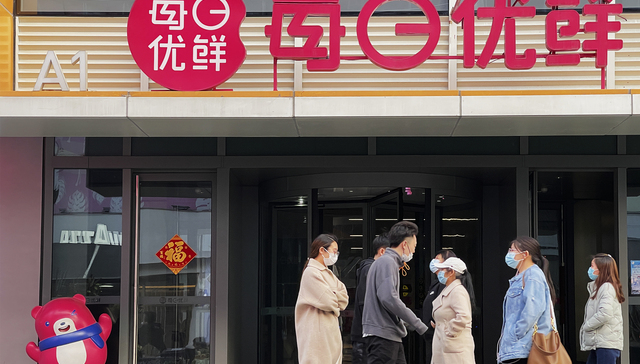
So it comes as quite a surprise then that the flag bearer of the front-end warehouse, Missfresh is giving up completely on instant deliveries, and retaining next-day deliveries only in a few hotspots. Is it the end for the front-end warehouse?
High costs, high prices
The front-end warehouse mode is not cheap. Self-established supply chains reduce procurement costs and wastage through intense digital management. However, the high cost has become a major obstacle. Performance at Dingdong Maicai accounts for more than 25 percent of total operating costs. Sales and marketing expenses are growing faster than revenue.
The solution was to force up the customer unit price and Dingdong Maicai turned a profit in December 2021, with a unit price of 66 yuan, much higher than the national level. It’s simply a matter of charging people more. Prices of fresh e-commerce products are around a third more than traditional supermarkets an obstacle in second-and third-tier cities.
Private brands and direct purchasing improve gross margins. Private brands accounted for 10.2 percent of overall GMV in Q4 2021.
Running out of money
The bleak outlook for Missfresh and Dingdong Maicai has hit the capital market’s confidence. Missfresh has been around for nearly 8 years and has raised almost 11 billion yuan, but still has can’t find a model that makes a profit.
As for Dingdong Maicai, although its operating data has improved since listing, and profits are up, cash reserves are decreasing at an accelerated rate.