

By LI Ziqing, LIU Shuang
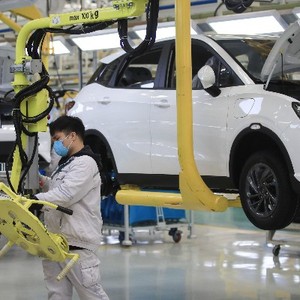
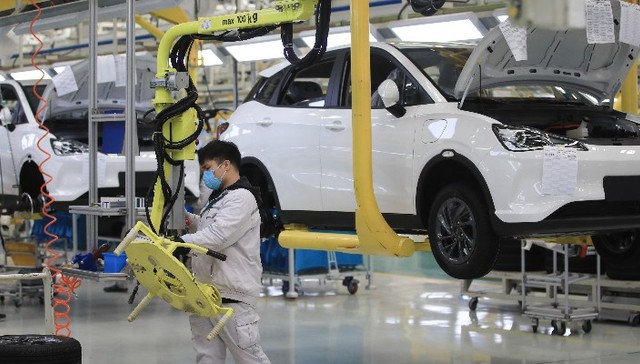
Automakers in China have been forced to delay or suspend production due to a shortage of parts. HE Xiaopeng, CEO of the EV maker XPeng, has said that all car factories in China would be forced to shut down by May if things don’t improve. Huawei executive YU Chengdong expects all hardware makers to suffer the same fate.
China’s car production dropped 9.1 percent in March. Sales were down by 11.7 percent. April’s outlook is grim given the paralysis of Shanghai’s factories, where thousands of car part manufacturers, plus a fourth of all chip makers in China, are clustered.
In February, a small outbreak in Suzhou temporarily shut down a Bosch factory, causing a shortage that affected production at carmakers including Geely and Great Wall Motor. Bosch has since maintained production by having its staff live on campus.
Automotive clusters everywhere are stretched. Companies with multiple factories are setting up Covid bubbles in Shanghai and maintaining capacity elsewhere. SAIC Volkswagen has two thousand workers living and working on campus in Shanghai and is preparing to bring more back to work. Its other factories, including those in the neighboring provinces of Jiangsu and Zhejiang, have maintained normal production.
Vitesco Technologies, a major car part maker, said its Shanghai factories remain open, and that capacity in Changchun, which has been in lockdown, is recovering.
TSMC and SMIC, two of the largest chip makers, also set up bubbles. But like all other car part suppliers, they need to ship products across the country. The delivery time index is the worst since February 2020. Car sales have suffered as well. One in five dealers across the country are closed due to Covid measures.
The central government has called for collaboration among local authorities and the private sector to stabilize the supply chain. Shanghai Customs has expedited clearance of electronic parts but insiders believe capacity in Shanghai and Jilin must recover soon.