

By ZHOU Chunlin
China sold more than two million cars overseas last year. That’s 8 percent of all cars made in China. For years, the number has hovered around 1 million. “Breakthrough,” some call it. Industry insiders think the sudden jump is more than a one-off.
Experts have attributed the increase to stronger R&D and reliable delivery. Chinese automakers have managed to ensure stable production amid massive supply chain disruption. The designs are smarter, more efficient, and better suited to the taste of a global audience. All these, said ZHANG Junyi, partner at Oliver Wyman, make the current moment ripe with opportunities for car exporters.
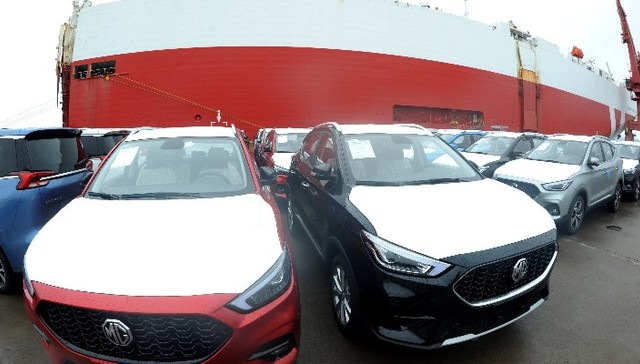
State-owned SAIC sold 700,000 vehicles overseas in 2021, the great majority being MG. The company expects to sell more than 120,000 cars in the EU this year. The fastest growing Dongfeng Motor saw its overseas sales up over 140 percent last year. The company is focused on the EU market along with Great Wall Motor whose sales there also more than doubled. A second Great Wall overseas factory, in Thailand, went into production last June. Geely, the largest non-state car marker, is focused on EVs in emerging markets. It now has dealerships in 28 countries.
All car makers have supply chain issues - batteries, exchange rates, regulation and tariffs. But the chip shortage is the biggest obstacle to expansion. SAIC has six container ships shuttling around the world, but there is usually a long wait for unloading. Unable to travel abroad, managers are operating by remote control.
All these, said ZHANG Xiang, a researcher at North China University of Technology, are temporary. At the end of the day, R&D is the key to get a foothold in any market with high safety standards given the enormous financial and reputational damage in case of recalls.
R&D is carried out domestically for most Chinese car makers but this is gradually changing. SAIC is to launch the first MG model completely developed in Europe. "The car is built according to EU standards for collision and pedestrian protection, which is higher than China's," ZHANG Liang, a manager at SAIC, said. "We do it this way not just to make it EU compliant. We want to make safer cars." Zhang also said the model would be critical to meeting SAIC's 120,000-unit sales goal in Europe this year.
Of the 2 million cars sold abroad, 310,000 were EVs, three times more from a year before. SAIC and Dongfeng will soon have new EVs aimed at the overseas market. The EU has enticing incentives for EV makers, and needs them to meet pollution goals. By 2025, Geely says 40 percent of its cars will be EVs.
Startups are trying to put themselves on the map, but without much to celebrate so far. Xpeng sold 400 cars in Norway last year, and opened stores in the Netherlands and Sweden. Nio and Zeeker will deliver their first models in Norway this year. Norway has the highest EV adoption rate in the world, making it perhaps the most competitive market.