

by WANG Yuhan
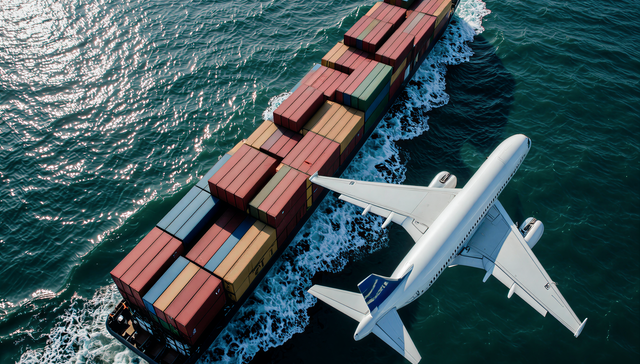
As leaders and business executives gather in Shenzhen for APEC 2026, the southern Chinese technology hub has crossed another milestone: its foreign trade surpassed the 5 trillion yuan (about US$750 billion) mark for the first time in the first 10 months of the year.
Shenzhen recorded 5.25 trillion yuan in imports and exports from January through October, up 40.9% from a year earlier, according to Shenzhen Customs, making it the first mainland Chinese city to cross the threshold. Exports rose 19.7% to 2.71 trillion yuan, while imports surged 73.7% to 2.54 trillion yuan.
"Shenzhen's foreign-trade growth reflects its long-established export advantages, as well as stronger competitiveness in Chinese manufacturing and increased global demand over the past two years," SONG Ding, a senior researcher at the China Development Institute, a Shenzhen-based think tank, told Jiemian News.
As China's economic and trade links with neighboring economies deepen, Shenzhen is playing a bigger role in regional supply chains, Song said.
Asia-Pacific trade expands
In the first 10 months, Shenzhen's trade with Hong Kong reached 1.06 trillion yuan, followed by ASEAN at 796.02 billion yuan and China's Taiwan at 517.77 billion yuan. Trade with South Korea jumped 51.2% to 305.39 billion yuan, while trade with Japan rose 69.2% to 303.23 billion yuan.
The pattern reflects China's broader trade ties with the region. China's trade with other APEC economies totaled 24.07 trillion yuan in the first three quarters of 2026, up 23.9% from a year earlier and accounting for 60.3% of its total foreign trade, according to China's customs authority.
Shenzhen's import mix points to its role as a major electronics manufacturing hub. Imports of mechanical and electrical products rose 69% to 2.02 trillion yuan in the first 10 months, accounting for nearly 80% of total imports. Integrated-circuit imports increased 62.8% to 1.08 trillion yuan, while imports of computer components more than doubled to 615.81 billion yuan.
On the export side, shipments of products including 3D printers and digital cameras rose a combined 46.5% in the first three quarters. Shenzhen accounted for more than 80% of China's exports of those products, according to Shenzhen Customs.
Beyond exporting products
Shenzhen technology companies are also building partnerships, distribution networks and applications across Asia-Pacific markets rather than relying solely on exports.
AI² Robotics, a Shenzhen-based general-purpose intelligent robotics company, told Jiemian News that it has established operations or industrial partnerships in Hong Kong, Singapore, Indonesia and South Korea.
The company said it plans to explore cooperation in Japan, South Korea and Southeast Asia in core components, research and development and manufacturing, while targeting applications including manufacturing, ports and logistics, and commercial services.
Bambu Lab, the Shenzhen-based 3D-printer maker, told Jiemian News that its products are sold in more than 100 countries and regions, including 18 APEC economies. The company said orders have been growing particularly strongly in Singapore, Vietnam, Malaysia and Thailand.
Camera maker Insta360, whose overseas markets account for 60% to 70% of revenue, has been expanding its physical retail presence. It opened flagship stores near Tokyo's Senso-ji temple and in New York's Times Square in August and September, respectively.
The company's global business remains closely tied to Shenzhen's manufacturing ecosystem. More than 90% of its raw materials can be sourced within a two-hour journey, Insta360 told Jiemian News, helping shorten development, production and delivery cycles.
Trade facilitation
Shenzhen is also seeking to make it easier for manufacturers to import components and ship finished products overseas.
China launched a cross-border trade facilitation campaign in 45 cities in 2026, while Shenzhen has introduced measures to streamline customs procedures and support imports of advanced equipment and key components for strategic industries.
The APEC summit gives Shenzhen an opportunity to showcase those trade and manufacturing capabilities to policymakers and business leaders from across the region.
"The summit brings together leaders and business representatives from multiple economies, giving them an opportunity to better understand Shenzhen's manufacturing capabilities and brands," Song told Jiemian News. "But what matters more is whether these exchanges can subsequently be converted into deeper economic and trade cooperation."