

by ZHANG Xilong
The Canton Fair is looking increasingly like a technology exhibition as it marks its 70th anniversary, with humanoid robots, electric aircraft and other advanced products taking center stage.
The 140th China Import and Export Fair opened in Guangzhou on October 15, bringing together more than 32,000 exhibitors and an expected 340,000 overseas buyers.
More than a third of the exhibitors are specialized manufacturers or leaders in niche industries. About 64% use technologies such as artificial intelligence and the industrial internet, while new and environmentally friendly products account for a record 23.2% and 26% of exhibits, respectively.
The shift reflects seven decades of change in Chinese manufacturing.
When the Canton Fair debuted in 1957, agricultural products, handicrafts and textiles dominated its exhibition halls. Machinery and electrical products gained ground in subsequent decades, becoming the largest product category in 1999. Today, consumer electronics remain a mainstay, but advanced energy storage, robotics and other high-tech products are attracting growing attention.
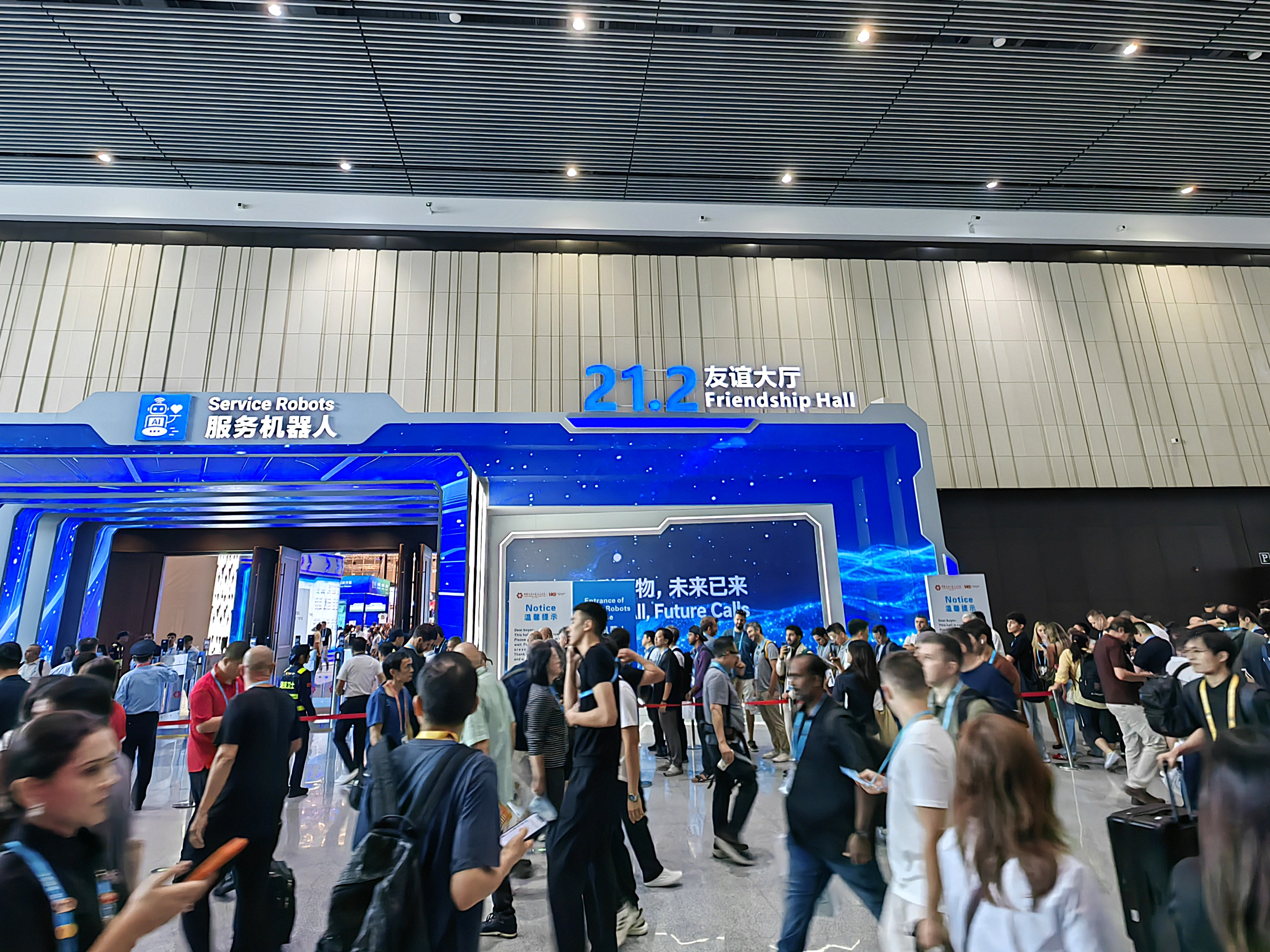
Photo from Jiemian News
From consumer goods to intelligent machines
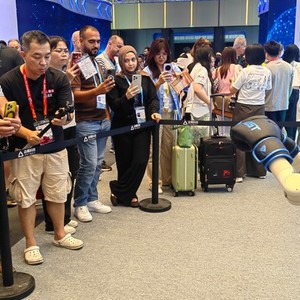
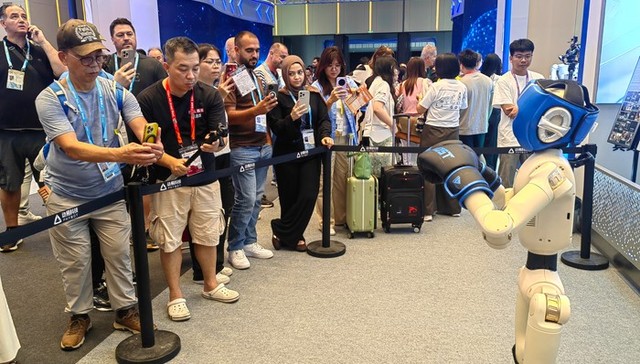
By 11 am on opening day, visitors were queuing outside the fair's service robotics section, where organizers had posted notices warning of a five- to 10-minute wait.
Inside, robot dogs performed tricks, humanoid robots played table tennis and boxing demonstrations drew crowds of overseas buyers filming the displays on their phones.
WANG Mengdi, marketing head at PHYBOT, told Jiemian News that the company expected more than 1,000 visitors to watch its demonstrations by late afternoon, with about 100 potential customers making inquiries. Buyers from Russia, Britain, Singapore and the Netherlands were among those expressing interest, Wang said.
The technology was not confined to exhibition stands. At the entrance to the Canton Fair Design Award exhibition, a wheeled humanoid robot was already at work, introducing award-winning products to visitors in English.
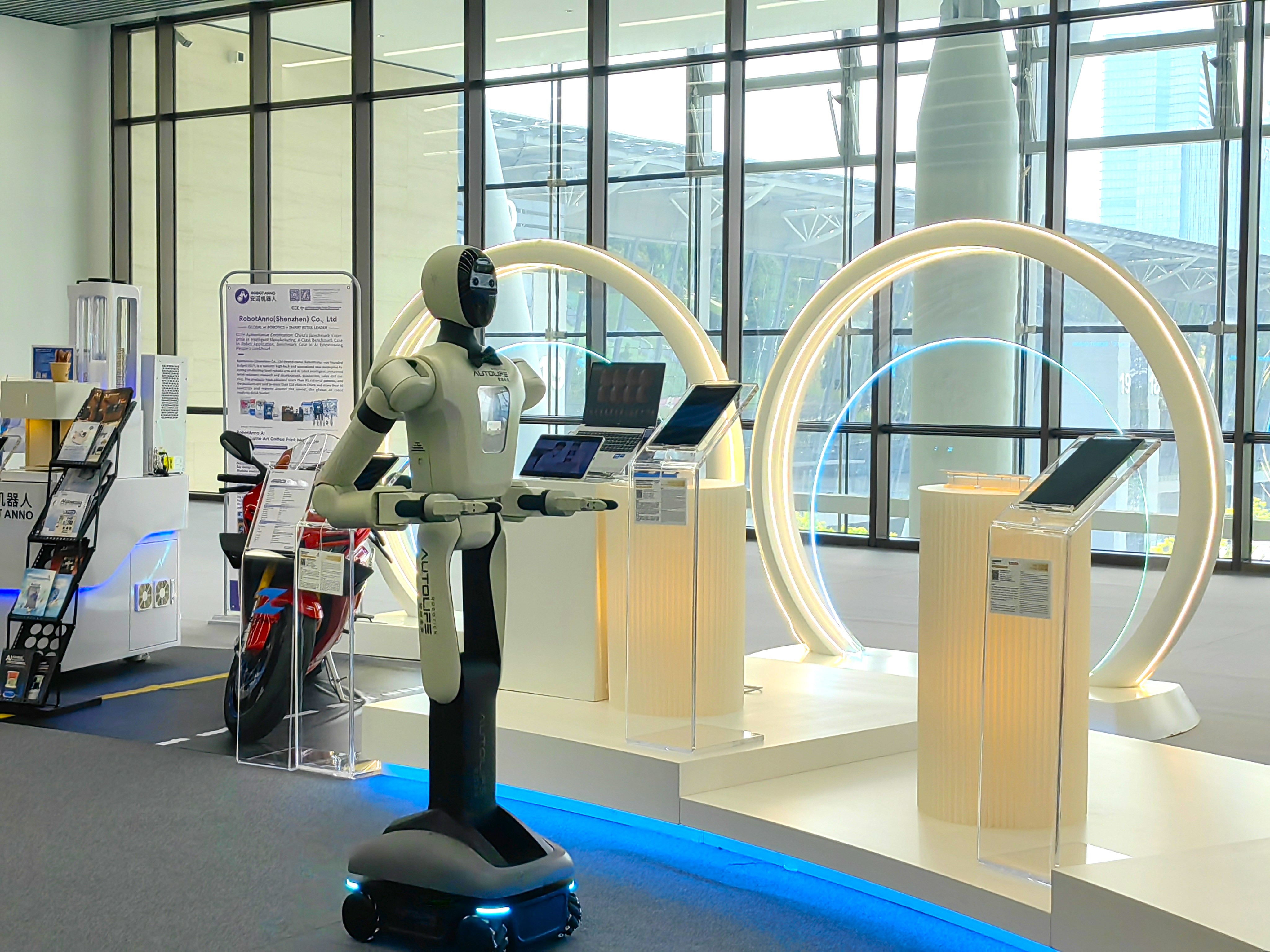
Photo from Jiemian News
Its developer, AutoLife Robotics, has been expanding beyond China, with overseas markets now accounting for about 20% of its business.
YE Zhipeng, the company's marketing director, told Jiemian News that its robots were being deployed across Southeast Asia, while a recent project brought robotic tour guides to Hong Kong's Wong Tai Sin Temple. Overseas demand was concentrated in visitor reception, retail services, restaurants and automated stores, he said.
Among those exploring the technology was Rocha, a Portuguese executive who heads the Guangzhou representative office of a Spanish international trading company.
His group operates 2,000 to 3,000 retail outlets worldwide and is looking for humanoid robots suitable for store operations. After discussions with AutoLife Robotics at the fair, he told Jiemian News that he planned to visit the company for a closer look.
Such inquiries suggest that some overseas buyers are moving beyond conventional consumer goods to explore Chinese automation and service technologies, although commercial adoption remains at an early stage.
Electric aircraft look overseas
Another emerging technology drawing attention was electric vertical takeoff and landing aircraft, or eVTOLs.
Chinese aircraft maker AutoFlight made its Canton Fair debut with models of its V2000CG CarryAll cargo aircraft and a firefighting variant, bringing a relatively new category of Chinese aviation products to the country's largest trade exhibition.
AutoFlight has secured Chinese regulatory approvals for the CarryAll and is pursuing overseas markets through demonstration flights and purchase agreements.
A company representative told Jiemian News that UAE-based Falcon Aviation Services ordered 50 aircraft in 2025, while Kazakhstan's Alatau Advance Air Group signed a preliminary agreement for another 50 following a demonstration flight.
In Southeast Asia, Indonesia's Whitesky Aviation signed a memorandum of understanding covering 60 passenger aircraft. Singapore-based JC Aviation has agreed to an initial commitment for two cargo aircraft and one floating vertiport, with plans to procure a further 258 aircraft and nine vertiports over the coming years, subject to additional agreements.
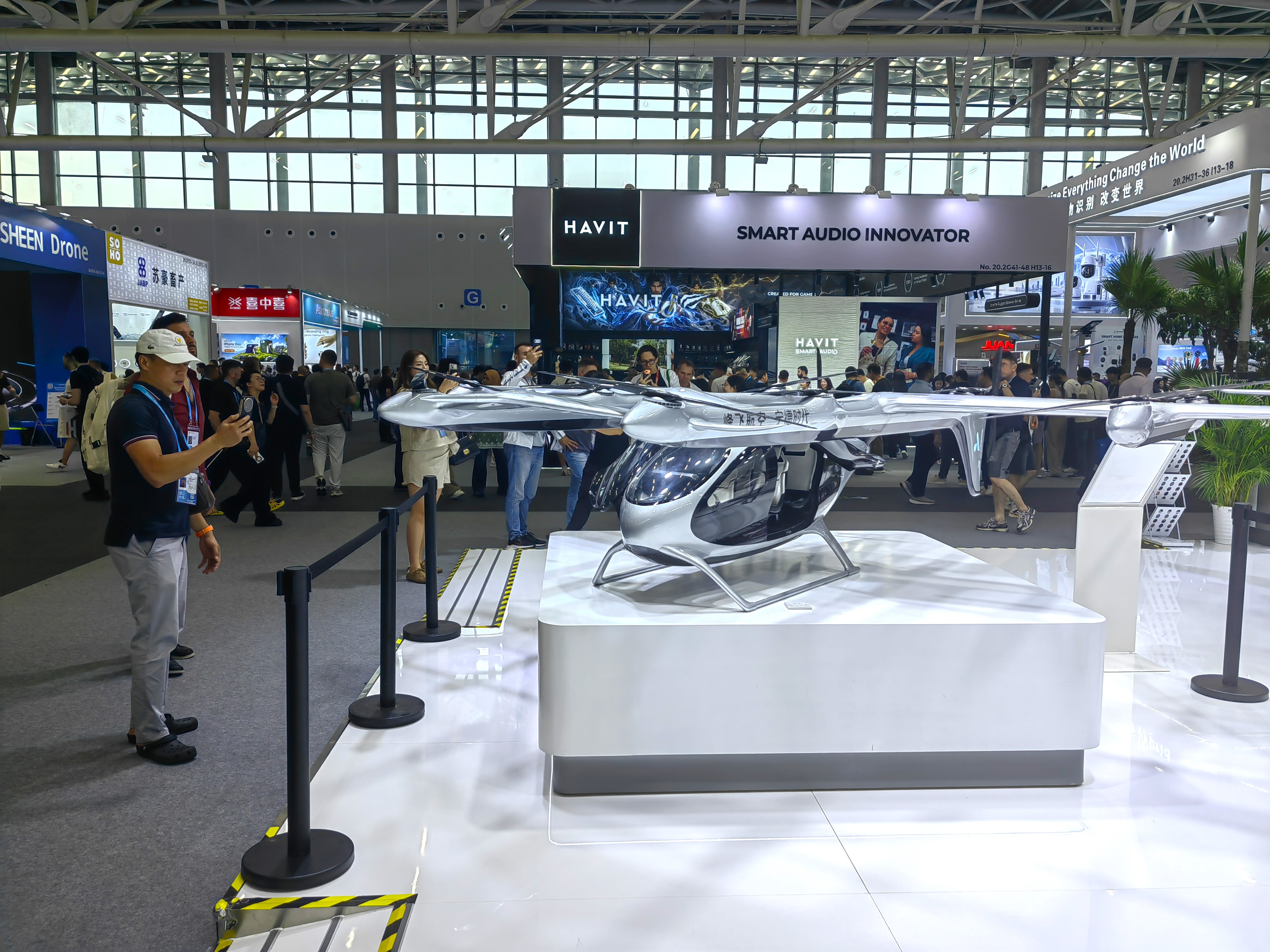
Photo from Jiemian News
Olivia, an AutoFlight representative at the fair, told Jiemian News that visitors from Indonesia, Thailand, South Korea, France, Argentina and the United States had made inquiries. She said Southeast Asia offered particularly favorable conditions for adoption because electric aircraft could help meet transportation needs across the region's many islands.
While these agreements do not necessarily translate into immediate deliveries, they illustrate how Chinese manufacturers are seeking overseas customers for products that barely existed in the market a decade ago.
Emerging markets bring new opportunities
The transformation of the Canton Fair extends beyond the products on display. China's trading relationships are also changing, with developing economies becoming increasingly important markets for Chinese goods, components and technology.
At an event marking the fair's anniversary on October 14, Chinese Premier Li Qiang highlighted the country's growing investment and industrial cooperation with developing nations. More than 50,000 Chinese-invested enterprises have been established overseas, nearly 90% of them in Global South countries, Li said.
The Canton Fair has stepped up efforts to reach these markets. In July, it held its first promotional event at the African Union headquarters, while recent editions have attracted an average of about 14,000 African buyers each.
Nigeria offers a glimpse of how demand is evolving.
CHEN Yang, who leads the Africa-based local team of Chinese cross-border payments provider PingPong in Lagos, told Jiemian News that Nigeria remained heavily dependent on imported electronics, clothing, household goods and everyday consumer products.
Growing smartphone adoption has fueled demand for handsets and accessories, as mobile devices become essential for work, transportation and payments.
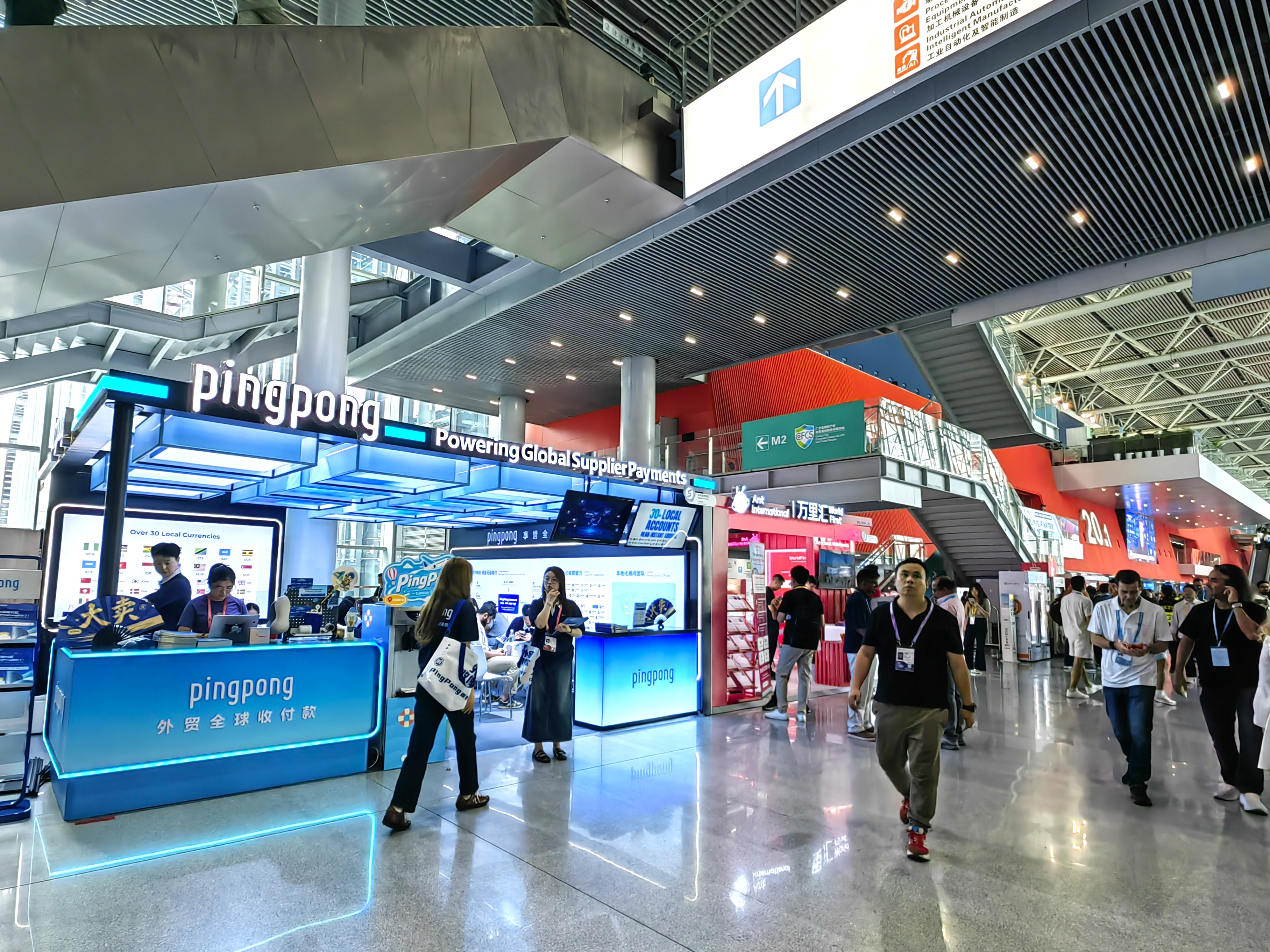
Photo from Jiemian News
But trade is no longer limited to shipping finished goods from China.
Some Chinese home appliance manufacturers now export components to Nigeria for local assembly, helping reduce transportation costs and potentially import duties. Core parts and materials, however, still come largely from China, Chen said.
This allows Chinese suppliers to participate more deeply in local manufacturing supply chains, even as production activities move closer to overseas consumers.
The expansion also brings challenges, particularly in cross-border payments.
Chen said foreign currency shortages and differences between official and parallel exchange rates had complicated transactions for Nigerian importers, especially smaller businesses.
Some have turned to payment providers to settle purchases in Chinese yuan. PingPong, for example, has helped a Nigerian solar equipment importer convert local currency into yuan for transactions with Chinese suppliers, he said.
From local assembly to cross-border payment services, such arrangements reflect the increasingly varied ways Chinese companies are participating in overseas markets.
Seven decades after its launch, the Canton Fair remains a showcase for Chinese exports. Yet the products on display, the buyers seeking them and the business relationships taking shape increasingly point to a broader role for Chinese manufacturers in global supply chains.