

by HUANG Xinyi
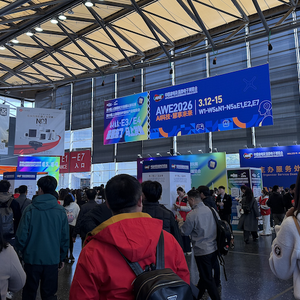
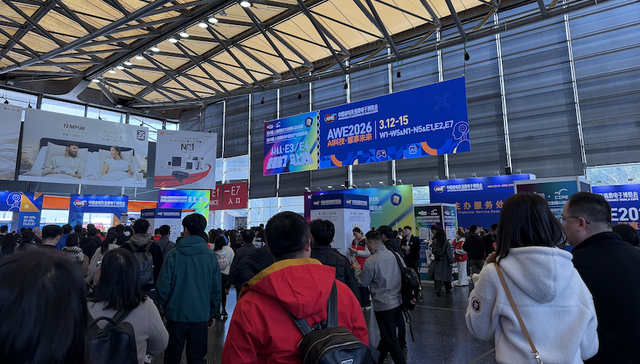
Chinese technology companies are showcasing AI-powered devices — from AI agents and humanoid robots to smart glasses and intelligent home appliances — at the 2026 China Appliance and Consumer Electronics Expo (AWE2026) in Shanghai, highlighting how artificial intelligence is moving into everyday consumer products.
The exhibition runs from March 12 to 15 across two venues for the first time. The main event is being held at the Shanghai New International Expo Centre, with a new exhibition zone in the Shanghai Eastern Hub International Business Cooperation Zone. Organizers expanded the show to 13 halls covering about 170,000 square meters.
From multimodal large language models and AI agents to brain-computer interfaces and smart wearables, the event has become a platform for companies to preview technologies they say could shape daily life in the next three to five years.
AI agents and large models showcased
Chinese AI startup MiniMax is showcasing MiniMax Agent, a general-purpose AI agent designed to handle complex tasks. The company is also demonstrating MaxClaw, a cloud-based assistant built on the open-source AI agent framework OpenClaw, which has recently gained traction in China.

Visitors can interact with the AI systems at the booth, where staff demonstrate how to deploy OpenClaw-based agents — a process Chinese developers jokingly call "raising lobsters", referencing the framework's lobster icon.
MiniMax has partnered with hardware firms to showcase AI-powered devices across robotics, wearables, education and home-office applications. One example is a robotic dog developed with Vbot that can autonomously follow users, navigate routes and perform tasks without remote control.
SenseTime is also showcasing AI products for office, education and home use. Its productivity tool Office Raccoon can generate presentations, analyze data and edit documents through natural-language prompts.
The company said capabilities such as document understanding and data processing have been packaged as modular "Raccoon Skills", allowing other applications in the OpenClaw ecosystem to call on those functions through AI agents.
Robots and brain-computer interfaces draw attention
Robotics is another focus at this year's show.
A dedicated humanoid robot zone has been set up in the advanced technology area of the Eastern Hub venue, where companies including Unitree Robotics, MagicLab and AgiBot are displaying humanoid robots. Tesla has also confirmed that its humanoid robot Tesla Bot will appear.
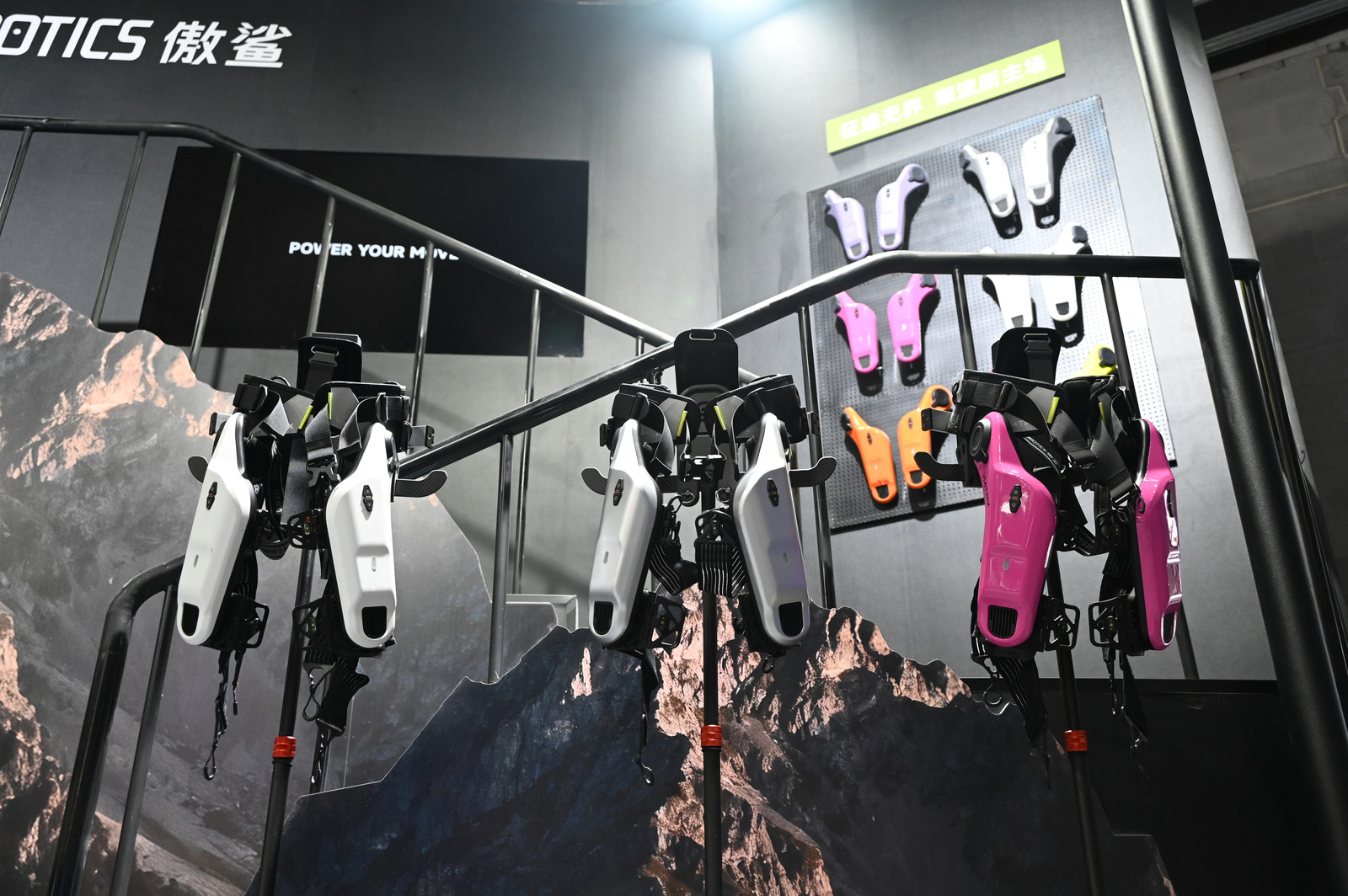
Chinese exoskeleton developer ULS Robotics is displaying products designed to assist with lifting and overhead tasks, including the VIATRIX power exoskeleton for outdoor environments.
Meanwhile BrainCo is presenting non-invasive brain-computer interface technologies, including prosthetic hands that use neural and muscle signals for intuitive control.
Smart glasses move further into the spotlight
Smart glasses are emerging as a closely watched hardware category as technology companies search for the next major AI device beyond smartphones.
Companies including XREAL, RayNeo, Xiaodu and Rokid are showcasing wearable devices combining augmented reality with artificial intelligence.
At the XREAL booth, the company is displaying its XREAL 1S AR glasses, which convert standard 2D video into immersive 3D content in real time using on-device computing.
XREAL is also working with Google on next-generation smart glasses under Project Aura, expected to launch in 2026 with a wider field of view and gesture and voice controls.
Xiaodu, a smart-device brand under Baidu, is presenting AI hardware including speakers, smart displays and glasses. Its Xiaodu AI Glasses Pro support first-person recording, real-time translation and meeting transcription.
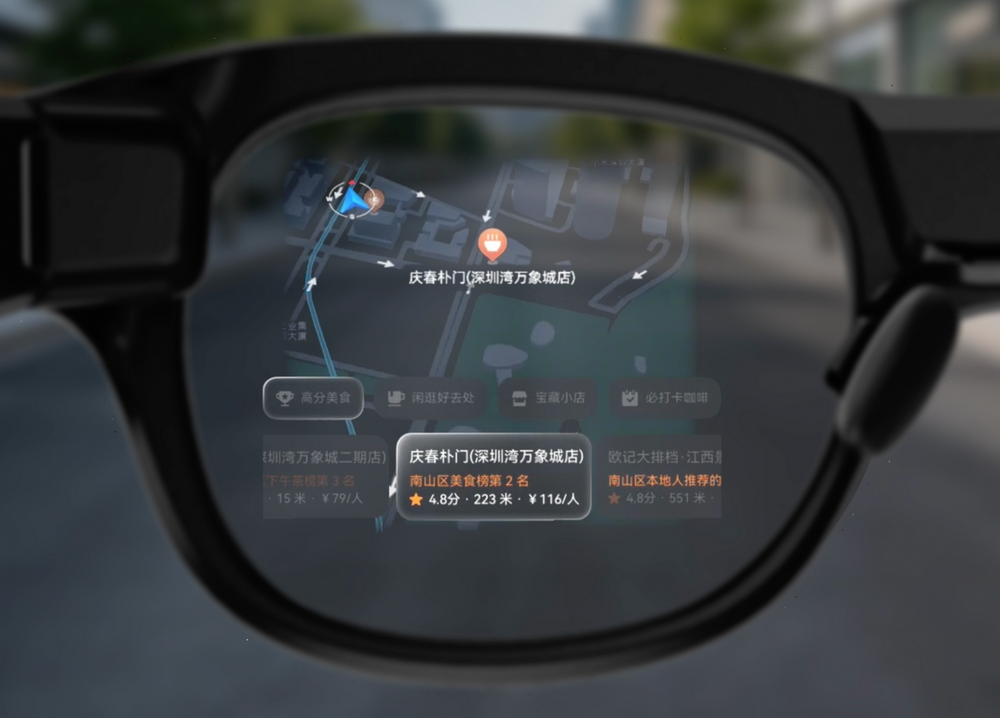
RayNeo has partnered with Amap, Alibaba's mapping service, allowing AR glasses to display nearby restaurants and recommendations directly in the wearer's field of view.
Home appliances increasingly powered by AI
Traditional home appliances are increasingly integrating AI.
At AWE, Huawei is presenting an upgraded version of its Harmony Smart Home system, which connects home devices through a central hub and integrates AI-powered voice assistants and sensors.
The system can automatically adjust lighting and airflow based on a person's location, monitor sleep conditions and detect falls while tracking indoor air quality.
Electronics maker LG is using the show to debut display products in China, including the LG SIGNATURE OLED T, described as the world's first wireless transparent television.
Chinese appliance company Dreame Technology has taken over an entire exhibition hall covering 7,378 square meters to showcase its smart-home ecosystem.
The exhibition highlights how Chinese technology companies are racing to embed artificial intelligence across consumer electronics, bringing AI from the cloud into everyday devices.