

by ZHOU Fangying
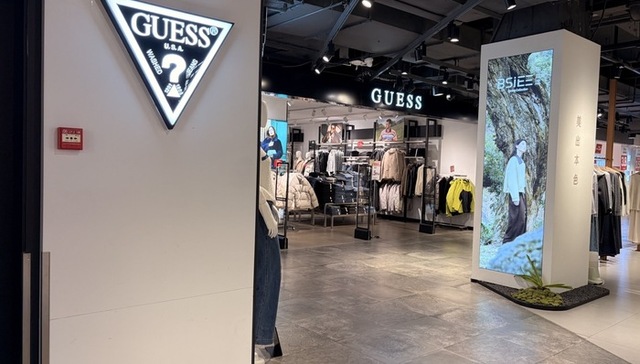
GUESS will shut all its mainland China stores – both online and offline – by the end of March, ending a 20-year presence in the market as its parent Authentic Brands Group reviews its strategy.
Store staff said outlets are clearing inventory at discounts starting from 80% off, while the brand's Tmall flagship store confirmed it will cease operations next month. Authentic described the move as part of a broader strategic adjustment in China but did not provide further details.
The closure comes weeks after Authentic completed the privatization of Guess?, Inc., taking control of 51% of its intellectual property. The US-based group operates a capital-light, licensing-driven model, suggesting GUESS may shift away from directly run retail in China.
Unlike traditional apparel companies, Authentic focuses on acquiring brand IP and restructuring licensing networks rather than running stores itself. Its portfolio includes legacy labels such as Reebok and Brooks Brothers, many of which have transitioned to regional licensing after acquisition. A similar restructuring could be on the cards for GUESS in China.
The brand's retreat highlights the mounting challenges facing mid-tier foreign fashion labels in the world's second-largest consumer market. In China, GUESS built its image around denim and a distinctly American, body-conscious aesthetic, with most products priced below 600 yuan and selected winter items exceeding 1,000 yuan. Yet its decline appears tied less to pricing than to shifting consumer preferences and a fading brand halo.
Chinese shoppers at the premium end have gravitated towards designer labels, affordable luxury and sportswear brands. At the mass end, the sub-600 yuan segment has been crowded by fast-response domestic chains and livestream-driven white-label products. GUESS lacks the supply-chain speed of Zara, the functional positioning of Uniqlo, or the social-media buzz generated by frequent collaborations.
Marketing centered on overt sensuality has also struggled to resonate as mainstream tastes tilt towards relaxed silhouettes, functionality and understated basics. Caught between premium repositioning and price competition, GUESS has found it difficult to redefine its value proposition.
Other American brands illustrate divergent paths. GAP, after its China operations were acquired by Baozun, a Chinese e-commerce services group, chose to stay and streamline operations, focusing on channel discipline and core categories such as childrenswear and denim. While revenue in its brand management segment has recovered, profitability remains under repair.
Forever 21, acquired out of bankruptcy by Authentic and partners, opted for a faster re-entry through licensing and e-commerce partnerships in China. The strategy enabled a relatively quick return but exposed the brand to intense price competition and the risk of dilution in crowded online marketplaces.
For GUESS, shutting directly operated stores may represent a reset rather than a permanent departure. Any return would likely hinge on clarifying its core strengths – particularly in denim craftsmanship and fit – and recalibrating its brand narrative to align with current aesthetics.
China's consumer market has not shut its doors to foreign brands. But it is proving less forgiving, favoring labels that pair operational efficiency with a clearly defined product identity. Whether GUESS can reposition itself under that framework remains uncertain.