

by CHEN Huidong
The Securities Association of China (SAC) on Jan 5 named LandSpace Technology, the country's leading private rocket maker, among six companies selected for on-site inspections in the STAR Market IPO process.
The move comes as China's commercial space sector pushes toward public listings despite most private rocket firms remaining loss-making.
LandSpace filed its prospectus on the final day of 2025, seeking to become the first commercial space company to list in China. The company plans to issue at least 40 million shares, or 10% of its enlarged share capital, to raise 7.5 billion yuan (about US$1.1 billion), with proceeds earmarked for reusable rocket production capacity and core technology upgrades.
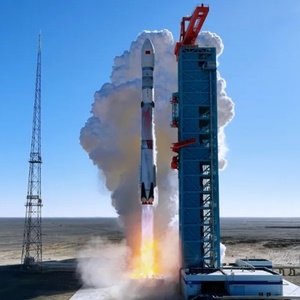
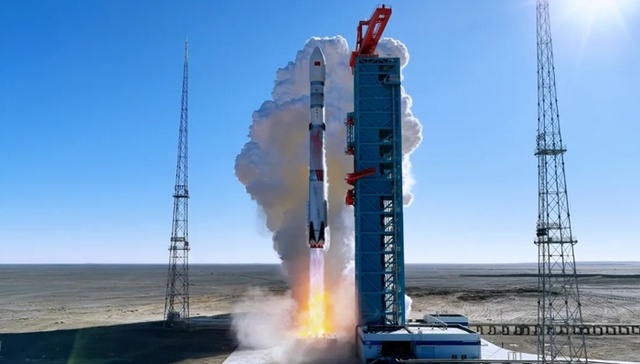
Founded in 2015, LandSpace focuses on liquid oxygen–methane reusable launch vehicles. Its Zhuque-2 has become the first liquid-fueled rocket developed by a private Chinese company to enter mass production and commercial service, while the larger Zhuque-3 has secured launch contracts linked to China's low-Earth-orbit satellite program.
Despite early technical progress, LandSpace remains loss-making. Industry sources told Jiemian News that most private rocket firms may need at least five years, or longer, to reach profitability, as the sector continues to rely heavily on financing.
Financial disclosures show that between 2022 and the first half of 2025, LandSpace generated only tens of millions of yuan in revenue while posting cumulative net losses exceeding 30 billion yuan, with research and development spending running into the tens of billions.
Industry insiders said the company's longer-term prospects are tied to China's planned low-Earth-orbit satellite constellation, often compared to Starlink, as limited state launch capacity could open space for private rockets that meet reliability and cost requirements.
Analysts said private rockets must clear two hurdles before gaining scale: proving reliability through repeated, stable launches, and cutting costs enough to undercut state-owned providers — a process that hinges on first-stage reusability and could take five to seven years.
The comparison with SpaceX highlights the challenge. The U.S. company achieved its first Falcon 9 booster landing in 2015 but did not record its first profitable quarter until 2023.
If LandSpace succeeds in its listing bid, it would set a key benchmark for valuation and investor expectations across China's private rocket sector, where several rivals are also preparing for IPOs.