

by ZHANG Rui
A survival contest staged on a mountain in central China racked up nearly 20 billion online views in just two months, transforming a niche outdoor challenge into a nationwide online phenomenon and testing the limits of China's traffic-driven business models.
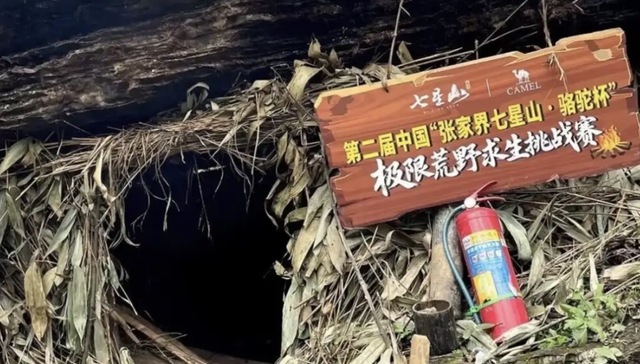
The Qixing Mountain Survival Challenge, held at Qixing Mountain in Zhangjiajie, one of China's best-known tourism destinations, was abruptly halted on Dec. 12 after a cold snap drove temperatures sharply lower. Organizers said the rules needed tightening to ensure participant safety. Eight finalists were declared joint winners, splitting 600,000 yuan (about US$85,000) in prize money and receiving lifetime free access to hundreds of local scenic sites, with medical costs also covered.
The contest's early end did little to cool its impact. What began as a niche outdoor challenge has evolved into a case study in China's attention economy, as livestreaming and short-video formats have become increasingly central to how audiences engage with outdoor content.
A viral machine built for speed
The most immediate payoff came in tourism. Visitor traffic to Qixing Mountain surged 297% year on year, the scenic area said, while ticket revenue rose about 30% and accommodation bookings climbed 20%. Brands from sectors including outdoor gear, travel services and agricultural products contacted the organizers, with more than 20 companies expressing interest in follow-up partnerships.
For sponsors, the appeal lay in raw exposure rather than polished storytelling. One outdoor apparel sponsor said online searches for its brand rose by about 30% during the event, describing the contest as a real-world "stress test" in which watching a jacket endure weeks of mud, rain and abrasion delivered a level of credibility that traditional advertising could not replicate.
Industry observers say the show's core innovation was not its format but its casting. "These contestants felt like people next door, not professional adventurers," said TAO Zi, a veteran outdoor explorer and founder of an adventure club in Shaanxi. "Their mistakes and endurance made it easy for viewers to imagine themselves in the same situation."
The effect spilled offline, with outdoor clubs reporting a surge in inquiries for basic survival skills and short camping experiences.
Plenty of views, fewer purchases
Despite its reach, the contest highlighted a familiar dilemma in China's creator economy: attention does not automatically lead to consumption or repeatable sales, with most viewers focused on the competition itself rather than associated brands.
For sponsors and operators, the unresolved challenge is how to turn a burst of spectacle into repeatable value rather than a one-off marketing spike.
The success of Qixing Mountain quickly inspired imitators. Similar survival contests appeared in Hunan, Yunnan and Zhejiang, often replicating the same livestream-plus-slicing model, with several halted early over safety lapses.
Organizers and industry veterans warn that multi-week wilderness events demand far higher levels of preparation than many newcomers anticipate, from route scouting to evacuation planning and professional safety staffing. Tao Zi said many copycat events underestimated these requirements.
Racing ahead of regulation
The incidents highlight a regulatory ambiguity in China. In Western markets, survival programming such as Man vs. Wild is clearly treated as television content.
The Qixing Mountain contest, by contrast, followed a China-specific model shaped by the mobile internet economy — low-cost production, livestream-driven distribution and participation by ordinary people rather than professionals. That efficiency and accessibility have moved faster than oversight, leaving responsibilities for safety, liability and participant protection poorly defined.
For now, Qixing Mountain stands as both blueprint and warning. Organizers are exploring ways to extend the IP beyond a single event, but sponsors, platforms and local governments are increasingly grappling with whether such spectacles need clearer rules — and how to apply them.