

by HUANG Shan
Sequoia China has agreed to acquire a majority stake in Italian fashion group Golden Goose from private equity firm Permira, according to information confirmed by Sequoia China to Jiemian News. Singapore state investor Temasek and funds under its wholly owned asset manager will participate as minority shareholders, while Permira will retain a minority holding after the transaction.
Sequoia China did not disclose the deal value. Italian newspaper La Repubblica has reported the transaction at about 2.5 billion euros (about 20.6 billion yuan). The same report said Golden Goose is expected to post adjusted EBITDA of about 250 million euros in 2025, up 10% year on year, compared with adjusted profit of 163.4 million euros in 2024.
YIN Lingzhi, an investment analyst who has worked for U.S.-based funds, told Jiemian News that based on the widely circulated deal size, Golden Goose would be valued at roughly 10 times EBITDA, which she described as mid-to-low and not expensive relative to comparable luxury brands.
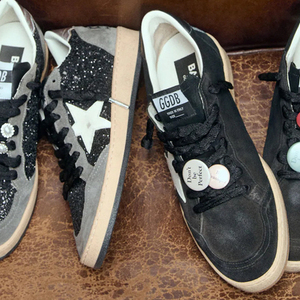
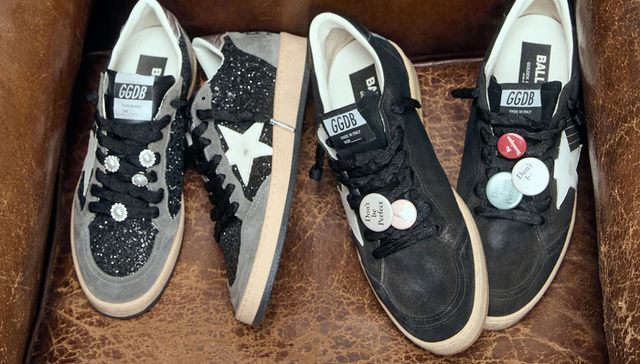
Founded in 2000 in Italy and now headquartered in Milan, Golden Goose is best known for its deliberately distressed sneakers. Its core footwear typically sells for 4,300 to 5,800 yuan, with limited collaborations priced above 7,000 yuan. The brand’s product mix remains heavily focused on footwear, supplemented by apparel and accessories.
Golden Goose had been approved to list on Euronext Milan in June 2024 but later postponed the IPO, citing volatile macroeconomic conditions and weak trading of European luxury stocks. YIN told Jiemian News the decision reflected market timing rather than fundamentals, as high inflation and interest rates in Europe had compressed valuations.
Several investors said the delayed listing created an attractive entry point for Sequoia China by reducing the likelihood of paying a premium. One U.S.-based fund investor, speaking on condition of anonymity, told Jiemian News that mature luxury assets available for sale are scarce, prompting institutions to pursue any deal that looks reasonably solid.
As of the end of the third quarter of 2025, Golden Goose operated 227 directly run stores across at least 23 markets, accounting for 79% of group revenue. Its retail network includes three "HAUS" flagship stores in Venice, Mexico City and Tokyo, its first children-focused store in Dubai, and boutique locations with cafés in China.
Revenue rose 13% year on year to 517 million euros in the first nine months of 2025, with direct-to-consumer channels, which generate nearly 80% of net revenue, growing 21%. The group has delivered double-digit revenue growth for three consecutive years, even as expansion slowed from 30% in 2022 to 18% in 2024 amid a weaker macro backdrop.
Against a flat global luxury market in 2025, Golden Goose posted an adjusted EBIT margin of 33.6% in the first nine months of the year, exceeding industry profitability levels cited in Bain & Company's latest luxury market report. Industry-wide margins have fallen back to 2009 levels, with some luxury groups dropping from a 23% peak in 2012 to around 15–16%.
"Golden Goose has weathered recent volatility in the sneaker segment," Luca Solca, managing director and global head of luxury research at Bernstein, told Jiemian News, noting that several luxury brands under groups such as LVMH and Kering have struggled in the category.
Analysts said the acquisition marks a shift from Sequoia China's earlier bets on smaller designer labels, such as Ami, WE11DONE, DESTRE and Holzweiler, placing the firm in control of a more mature business. The key challenge now is accelerating growth outside Europe and the United States, particularly in Asia.
Golden Goose has said it aims to reach 1 billion euros in revenue by 2029, up from nearly 600 million euros in 2024. Analysts told Jiemian News that deeper penetration of the China-led Asian market will be critical to achieving that goal.
The brand operates 41 boutiques in greater China. While these stores account for nearly one-fifth of Golden Goose's global directly operated locations, Asia-Pacific contributes just 12% of revenue, suggesting room to improve per-store productivity.
Sequoia China said the deal would accelerate Golden Goose’s global expansion, with analysts expecting a stronger push to build an Asia-focused direct retail network. As controlling shareholder, Sequoia China will gain greater influence over strategy and governance, though investors cautioned that cross-border integration risks remain.
Sequoia China said Silvio Campara will remain chief executive, leading the company alongside the existing management team. Marco Bizzarri, a former chief executive of Gucci, has been appointed non-executive chairman, a move analysts described as supportive of Golden Goose's next growth phase.