

by LU Yibei
As Hainan Free Trade Port begins island-wide customs operations on Dec 18, China's beverage and freshly brewed tea brands are repositioning the island as a lower-cost production base and, increasingly, a testbed for overseas expansion, under a regime that treats goods moving between Hainan and overseas markets differently from those entering the Chinese mainland.
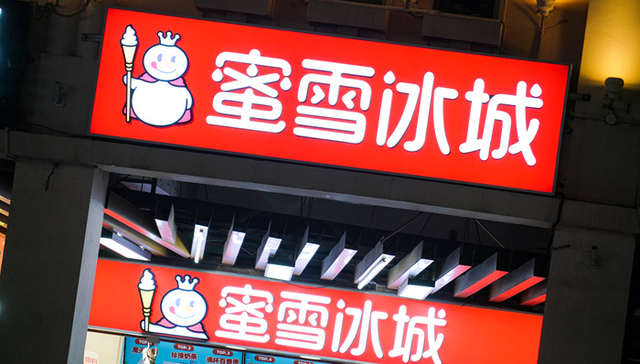
Dongpeng Beverage, a major Chinese energy-drink maker, disclosed in April that it had broken ground on a 1.2 billion yuan manufacturing project. Swire Coca-Cola, Coca-Cola's bottling partner in parts of China, has also rolled out a new production facility in Haikou National High-Tech Industrial Zone ahead of the customs launch. Freshly brewed tea chains including Mixue Ice Cream & Tea, China's largest tea chain by store count, have likewise established factories in Hainan.
Under the so-called "first-line opening, second-line control" framework, imports into Hainan face fewer barriers, while goods entering the mainland remain subject to customs supervision. For beverage and tea brands—industries that rely heavily on imported ingredients, equipment and logistics efficiency—the shift directly affects unit costs and pricing flexibility.
Dongpeng Beverage told Jiemian News that Hainan's zero-tariff policy has reduced the cost of importing high-end equipment and specialty ingredients. More importantly, products that achieve over 30% value added through processing in Hainan can be sold into the mainland exempt from import duties, improving pricing flexibility even after value-added tax and consumption tax.
With island-wide customs operations now in place, the scope of zero-tariff treatment has widened. Ministry of Finance data show that about 6,600 tariff lines, or 74% of all product categories, are now covered, up nearly 53 percentage points from before the launch. Eligibility has also expanded to most enterprises with genuine import needs across the island.
Against that backdrop, companies are also using Hainan as a base to test overseas expansion.
Geographically, the island sits on China's southern edge facing Southeast Asia and South Asia, shortening shipping distances and lowering logistics costs. Institutionally, zero tariffs, duty exemptions for value-added processing and preferential tax treatment create a cost base that differs markedly from the mainland—an advantage for brands testing overseas markets.
That logic underpins Dongpeng's overseas ambitions. In October, the company said in its Hong Kong listing prospectus that part of the proceeds would fund overseas supply-chain infrastructure in Southeast Asia. While its products are sold in 25 countries and regions, overseas revenue remains marginal, with more than 99.8% of sales still coming from the mainland from 2022 to the first half of 2025.
For freshly brewed tea chains, Hainan's role may be even more pronounced. Unlike bottled drinks, these brands depend on semi-finished inputs where consistency across thousands of outlets is critical. Mixue Ice Cream & Tea, which operates a franchise-heavy model, illustrates why Hainan matters.
By June 30, 2025, Mixue Ice Cream & Tea operated 4,733 overseas stores, primarily in Southeast Asia, with recent expansion into markets including Kazakhstan and the United States, and planned entries into Mexico and Brazil. A key pillar of that push is a supply-chain base built in Dingan County, Hainan, in 2022, where production lines for coffee, coconut milk and tea are now operating, with coffee capacity alone reaching 22,000 tonnes per year.
For franchise-driven tea chains, concentrating processing in Hainan helps stabilize supply and control costs. Executives say the island serves as a buffer, allowing companies to preserve scale advantages while avoiding the higher logistics costs of shipping directly from the mainland and the regulatory risks of building factories overseas.
The approach is not without friction. Goods moving from Hainan into the mainland still face customs declarations and inspections, which can add time and compliance costs. Even so, companies say the preferential regime makes export-oriented processing more viable.