

by HE Liuying
Competition in China's offline payment market is heating up again, as the country's two dominant platforms take increasingly different approaches.
In recent months, Alipay has moved aggressively to expand NFC-based tap payments, while WeChat Pay has continued to refine its long-established QR-code system and proceed more cautiously with palm-scanning technology. QR codes have dominated China's offline payments for years, and the contrast between the two strategies has renewed attention on whether new payment methods can alter deeply ingrained habits.
Since last summer, Alipay has stepped up promotion of its NFC service, saying its user base has grown to more than 200 million. WeChat Pay has shown little inclination to follow at the same pace, prompting questions from investors.
Pony Ma, chairman and chief executive of Tencent Holdings Ltd., addressed the question at the company's 2025 annual general meeting. Ma said WeChat had chosen to combine QR codes with palm scanning rather than pivoting toward NFC.
Scanning, he said, has become instinctive for Chinese users after more than a decade of daily use — from adding contacts to making payments and accessing mini-programs. NFC payments, by contrast, can leave users uncertain about device settings, accidental transactions and data protection.
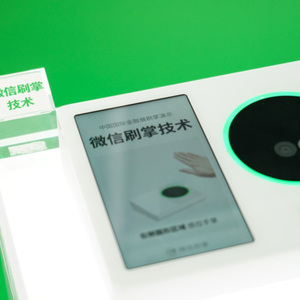
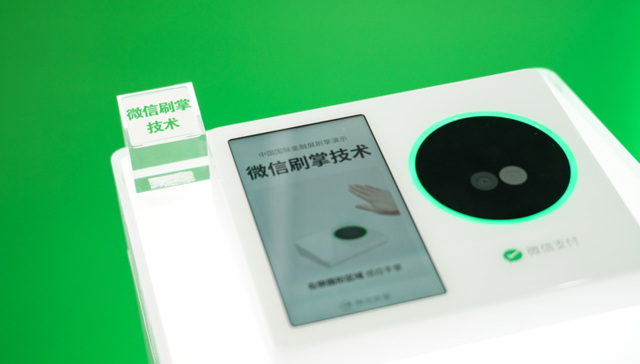
That thinking underpins WeChat's emphasis on payment methods that are visible, and user controlled. Ma added that the company's palm-scanning technology is globally advanced and protected by multiple layers of security.
Tencent said in comments to Jiemian News that it remains focused on QR-code payments, which it sees as the lowest-cost and most widely accepted option for merchants, particularly small businesses. Palm scanning, the company said, is not intended to replace QR codes but to serve specific scenarios where payment and identity verification can be combined, such as community canteens.
Separately, WeChat has begun testing NFC payments overseas. Some overseas users have reported an "overseas NFC" option that allows payments at Visa-enabled terminals. Industry sources said the move reflects efforts to adapt to markets where Visa and Mastercard networks are already entrenched. Tencent did not comment on its broader NFC plans.
On the ground, the difference between the two platforms is becoming more visible. Payment terminal suppliers said Alipay has been pushing NFC adoption at scale through hardware partnerships and incentives, while WeChat's palm-scanning deployments remain limited and exploratory.
Users report a similar divide. Several consumers said they now encounter Alipay's tap-to-pay option frequently in daily spending, often with promotions attached. Palm-scanning terminals, by contrast, remain rare.
The divergence has also raised questions about why Alipay has not pushed palm scanning more actively. Alipay explored palm-recognition technology as early as 2015 and filed related patents in 2023, fueling expectations that it would enter the space. Instead, it shifted its focus toward NFC.
In a public interview, CHEN Liang, a senior vice-president and chief marketing officer at Ant Group, said part of the motivation was the growing presence of overseas users in China, many of whom are accustomed to NFC-based payments. He said Alipay does not view QR codes as obsolete but believes additional contactless options are needed to align with global payment practices.
Analysts say the choice reflects practical considerations rather than a simple technology preference. LIU Bin, a China-based researcher focused on financial policy, said palm-scanning payments remain at an early stage globally, with limited adoption and high deployment costs. NFC, by contrast, is already built into most smartphones and fits existing international payment networks.
Alipay and WeChat have tested other payment technologies before. Facial-recognition payments were once heavily promoted but failed to gain mass adoption due to hardware costs, privacy concerns and disruption during the pandemic.
As a result, QR codes remain firmly in place. According to a 2024 survey by the Payment & Clearing Association of China, more than 90% of users still rely primarily on QR-code payments, with WeChat Pay and Alipay together handling about 80% of offline mobile transactions.
Against this backdrop, the current competition is less about replacing QR codes than about whether alternative methods can find room alongside them. Alipay is testing how far NFC can expand beyond specific use cases, while WeChat is focused on defending its lead in QR-code payments while introducing new technologies at a measured pace.
How these strategies will play out remains to be seen. What is clear is that in China's offline payment market, changing technology may be easier than changing habits.