

by YANGSHU Hongji
Shanghai is becoming a key hub for China's commercial space push, adding production capacity, financing support and research facilities as the country works to accelerate low-Earth-orbit (LEO) satellite deployment.
At the 2025 Satellite Internet Industry Ecosystem Conference, officials said the city is grouping satellite manufacturing, terminal development, standards work and testing into a single cluster, replacing a previously dispersed approach.
China now has more than 500 commercial space companies, and the top 100 were valued at RMB 728.1 billion (about US$103 billion) in 2024, said WANG Jianyu, an academician of the Chinese Academy of Sciences.
More than 100 LEO plans have been announced nationwide, but deployment is still slow. Companies cite limited manufacturing scale, uneven supply chains and launch constraints as key bottlenecks.
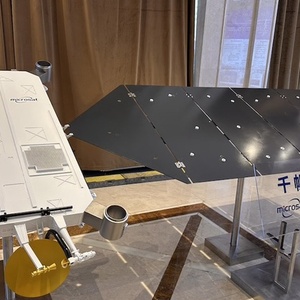
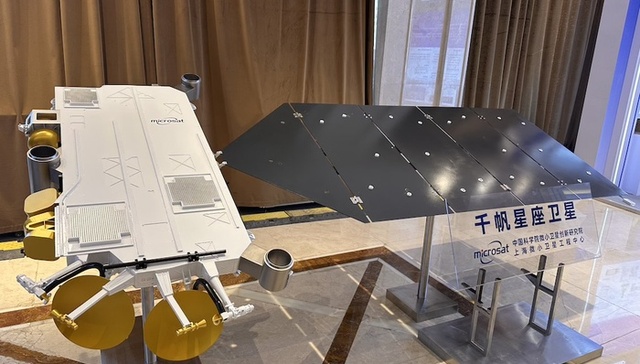
One of the furthest-along efforts is the Spacesail Constellation (also known as Qianfan), developed by Shanghai Spacecom Satellite Technology. In-orbit and overseas tests delivered downlink speeds above 500 Mbps. The constellation remains far smaller than SpaceX's Starlink, but executives said deployment efficiency is improving as suppliers ramp up.
Global filings for LEO orbital slots have exceeded theoretical limits, tightening the window for new networks. Executives said fragmented supply chains and early-stage reusable-launch systems continue to elevate costs, warning that China could miss the cost window required for mass-market LEO services. Sector-wide funding needs exceed RMB 7 billion this year.
Shanghai is moving to fill these gaps. The Songjiang district now hosts more than 50 satellite-internet companies, forming one of the country's densest commercial-space clusters. Seven shared platforms are being expanded to support constellation design, sensing technologies and system integration. Officials said Shanghai's manufacturing depth and access to capital give it an edge over other Chinese cities building space clusters.
Financing support is also rising. A city-run framework now links banks, insurers and investment institutions to offer equity, credit and risk-protection tools for long-cycle aerospace projects.
Launch capability is advancing. LandSpace's Zhuque-3 reached orbit last week in China's latest reusable-rocket test. Additional flights by Space Pioneer and the Long March-12A team are planned for December. Executives said collaboration between state-owned aerospace groups and private firms is helping accelerate testing.
Industry leaders said scaled manufacturing and tighter coordination will determine China's next phase of commercial-space growth. Shanghai's cluster — combining production, R&D and financing — gives the country one of its strongest bases for expanding LEO deployments.