

by ZHU Yongling
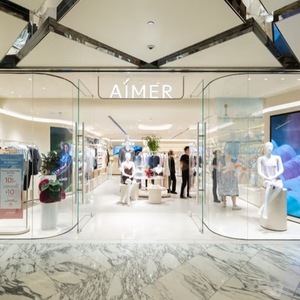
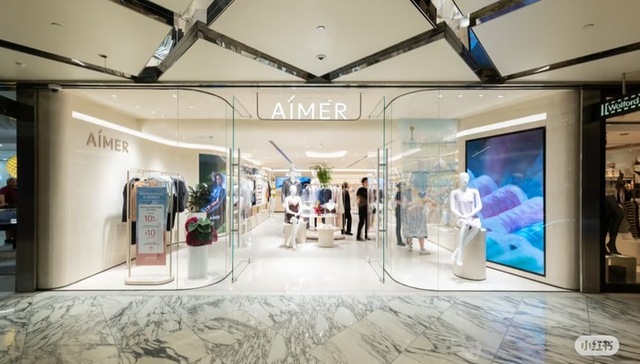
Chinese lingerie maker Aimer has opened its first store in Australia, choosing the high-end Westfield Sydney mall for its first brick-and-mortar location outside Asia. Surrounded by labels such as Loro Piana, Prada, Miumiu, YSL and Celine, the store marks an unusually premium placement for a Chinese lingerie brand.
Yet its first week drew limited attention from local shoppers, and most of the online buzz came from Chinese-language influencers invited by the company — a contrast that highlights the hurdles Aimer faces in appealing to mainstream Western consumers.
Aimer is expanding abroad at a moment when growth at home has slowed. China's lingerie market has softened in recent years as competition intensified, and overall demand weakened. Although Aimer remains a well-known player, its revenue has largely plateaued, and its market share has slipped in a crowded field. With mid-tier and premium spending decelerating and pricing pressure rising, domestic brands have fewer avenues for expansion — pushing more of them to look overseas.
The company ventured into foreign markets early, entering Singapore, Cambodia, Vietnam and Dubai over the past decade. Those efforts, however, relied heavily on overseas Chinese shoppers, and overseas business contributed less than 2 per cent of revenue in 2024. Aimer is now attempting to make a more meaningful shift: moving from diaspora-driven sales to building a broader global presence, a transition that demands time, resources and cultural adaptation.
Recent moves point to that ambition. Aimer has developed localized lines for Southeast Asia, added production capacity in Vietnam and launched its first North America-focused collections on TikTok Shop US. The United States — the world's largest lingerie market — is central to the strategy. Unlike China, where demand has cooled, US consumer spending in the category has held relatively steady, offering clearer long-term potential for brands able to break into a highly competitive landscape.
Entry, however, will not come easily. The brand has little name recognition in Western markets, even as many of its bras are priced at US$60–100, close to Victoria's Secret and above some mass-market competitors. Competing at that level requires more than efficient supply chains; it requires brand meaning and emotional resonance. Differences in fit and sizing add further complexity, though Aimer has been quick to refine its designs based on early feedback.
Brand positioning rather than pricing is central to its US approach. "Aimer is not rushing to compete on price in the US," said LIU Guorui, founder of cross-border service firm Telling, which works with the company. "The priority is to establish its positioning and narrative, tapping mainstream social platforms and local influencers to build digital brand equity." He added that the US lingerie market offers "very little white space", meaning newcomers must win share from entrenched incumbents.
Sydney offers an early indication of this challenge. The store presents a polished, high-end image, yet foot traffic has leaned heavily toward Chinese-speaking visitors, and Aimer remains little-known among Australian shoppers. For now, its overseas progress is incremental rather than dramatic. Even so, the direction is clear: with domestic momentum fading, Aimer is trying to extend its reach from familiar diaspora communities to Western consumers who have long gravitated toward established global brands.
Industry analysts say Aimer's experience reflects a broader shift within China's consumer sector. "The main barrier for Chinese apparel brands overseas is still brand power, not product capability," said CHENG Weixiong, founder of Shanghai-based consultancy LIANGQI Brand Management. Global influence, he noted, is built "market by market, year by year," rather than through operational strength alone.
Aimer's overseas push, analysts say, is less about short-term returns and more about laying foundations in markets where recognition takes time. Whether its Sydney store becomes a meaningful foothold or simply a symbolic first step will depend on how effectively Aimer can narrow the gap between global ambition and actual consumer awareness — a gap many Chinese brands are now attempting to bridge.