

by ZHOU Shuqi
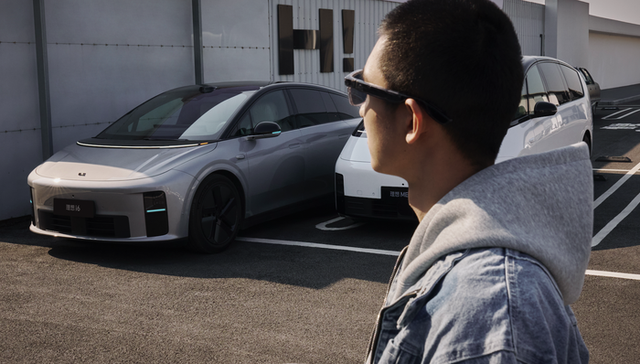
Li Auto has entered the AI‑wearables market with its first pair of smart glasses, taking a different path from Chinese EV makers that are cutting prices to protect margins. The device, Livis, went on sale on December 3 at 1,999 yuan, with an additional 300-yuan incentive available. The launch follows a third‑quarter loss for the company and comes as growth in China's EV market continues to slow.
Chief Executive LI Xiang told analysts last week that Li Auto aims to shift toward "embodied intelligence," positioning vehicles and wearables as assistive devices rather than standalone hardware. Livis is the company's first attempt to extend that vision beyond the car.
The glasses weigh 36 grams—lighter than Xiaomi's model—and deliver 18.8 hours of typical battery life. Commands issued through Livis respond in about 800 milliseconds, compared with 7–8 seconds through Li Auto's smartphone app. The device also includes what the company calls the industry's first wireless‑charging glasses case.
FAN Haoyu, a senior vice‑president, said the company prioritised weight, power use and responsiveness over adding an AR display. He said users care most about clear audio and low leakage for long calls and recordings.
Li Auto plans to introduce an AR version developed with Zeiss and ultimately a fully standalone model that does not rely on a phone. The company began exploring AI‑driven hardware in 2020 and completed its first prototype in mid‑2024.
Competition in AI glasses has intensified since Meta's Ray‑Ban Meta device, priced at US$299, became the first mass‑market success, shipping more than 1 million units within a year. Chinese tech firms including Alibaba, Baidu, Huawei and Xiaomi, and startups such as RayNeo, Rokid and INMO Tech, are also pushing into the category, though most models focus on incremental hardware upgrades.
Li Auto lacks a smartphone ecosystem, which could limit Livis' usefulness outside driving scenarios. Fan said the company aims to optimise a narrow set of high‑frequency tasks rather than add low‑use functions. CHEN Wei, head of the model platform, said development has shifted toward autonomous planning and action, and Li Auto is tailoring capabilities to a smaller group of core scenarios.
Fan argued that many smartphone makers design hardware first and add AI later, calling it a "built‑in constraint." He said Li Auto begins with model‑driven scenarios before designing hardware around them.
The company expects around 10% of its 1.4 million owners to buy Livis. By comparison, Xiaomi's AI glasses peaked at 5,000–7,500 daily sales on Douyin, the Chinese version of TikTok, at launch before dropping to 100–250 a day. IDC forecasts global AI‑glasses shipments will reach 14.5 million units in 2025, including 2.9 million in China, rising to more than 40 million by 2029.
Fan said an "iPhone moment" for AI glasses could come around 2027–2028, coinciding with progress in L4 autonomous driving. The shift into wearables is part of Li Auto's broader push to secure a role in a future ecosystem linking people, vehicles and the home. With profitability under strain, the success of Livis will depend on whether Li Auto's user base and scenario design can support a standalone device business.