

by HUANG Hua
After eight editions of the China International Import Expo (CIIE), many multinational life science companies have deepened their roles in China—not only as sellers, but as investors and co-developers in the local health-care market.
At this year's CIIE, companies including Zeiss, Medtronic, Elekta, Siemens Healthineers, Roche and others showcased how their imported innovations have evolved into locally manufactured products. This "exhibit-to-product" transformation underscores China's growing appeal as a destination for advanced manufacturing in life sciences.
Zeiss, Elekta lead wave of localized high-end equipment
Martin Fischer, president and CEO of Zeiss Greater China, attended the expo weeks after assuming his post. Zeiss displayed its first domestically produced high-end surgical microscope, the PENTERO 800 S, now made in Suzhou. The model marks the company's first locally manufactured product following the opening of its 13,000-square-meter Suzhou plant in 2024, Zeiss' first land-owned factory in China with a total investment of about 250 million yuan.
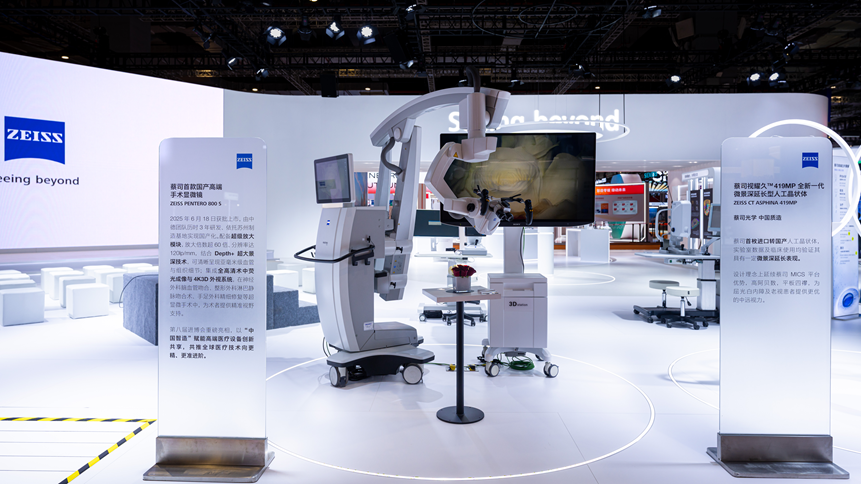

Zeiss has since expanded local production to include three high-end research microscope systems, becoming the first international firm to deliver domestically made laser confocal and field-emission scanning electron microscopes.
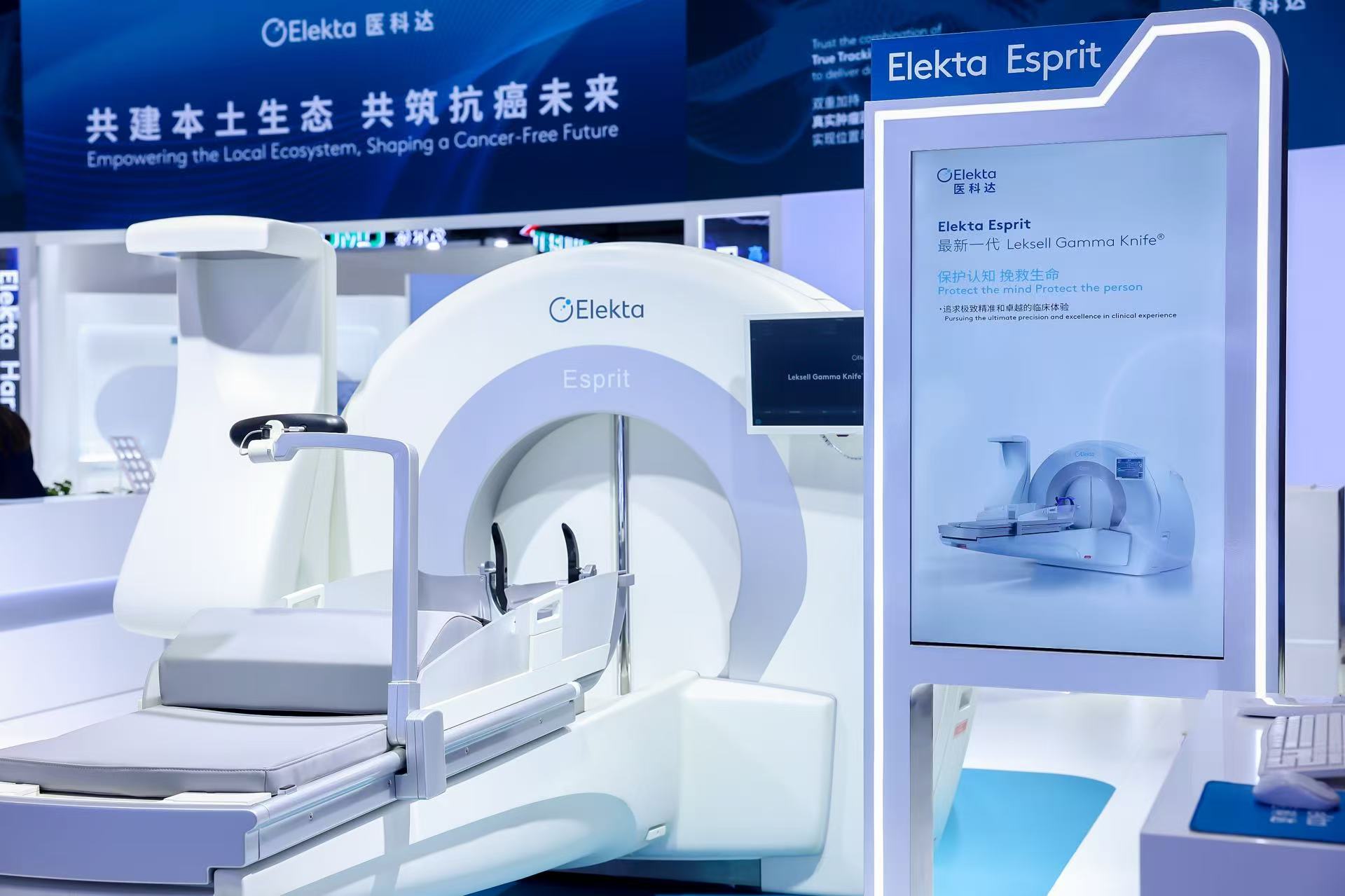
Elekta, the Swedish radiation-therapy pioneer that invented the Gamma Knife, also reported full localization of its product line in China. Founder and chairman Laurent Leksell said that since Elekta's first CIIE appearance in 2018, its China operations have advanced from regional headquarters and joint ventures to full-scale local manufacturing. Its Beijing plant now serves as one of the company's most comprehensive global facilities, producing systems such as the Leksell Gamma Knife Esprit and Elekta Evo radiotherapy platform for both domestic use and export to over 120 countries.
Siemens Healthineers has likewise made China a key global base: as of August, its Shenzhen site had delivered 10,000 medical devices—65% of them for export—and cultivated over 300 local suppliers. A new 1-billion-yuan R&D and manufacturing base broke ground there in January.
Pharma multinationals localize drug production
Beyond devices, pharmaceutical companies are also accelerating local manufacturing. Eli Lilly's tirzepatide injection, a GLP-1/GIP dual-target drug already approved in China for diabetes and weight management, is now under priority review for local production. Lilly is investing 1.5 billion yuan to expand its Suzhou plant to scale up output of diabetes and obesity medicines—paving the way for a "China-made tirzepatide."
Boston Scientific's first China factory in Shanghai's Lingang area has completed test production of four medical devices now under registration, while Roche announced its 2-billion-yuan biopharmaceutical plant in Shanghai will begin local manufacturing of faricimab (Vabysmo) eye injections by late 2026.
Medtronic, meanwhile, is deepening integration with Chinese partners through its AiBLE smart-surgery ecosystem, co-developing minimally invasive spine and laser-ablation technologies with local startups.
Consumer health and vision products follow suit
French-Italian group EssilorLuxottica's Stellest myopia-control lenses, first unveiled at the 2020 CIIE, are now mass-produced at its Shanghai plant and have spawned the new Stellest 2.0 smart eyewear line. Consumer-health company Haleon, known for brands such as Centrum and Voltaren, has also ramped up local production after acquiring its joint venture GSK Tianjin and expanding its Suzhou facility.
Together, these moves illustrate how the CIIE has evolved from an import showcase into a catalyst for global firms to manufacture, innovate and partner within China's vast and fast-maturing health-care market.